
‘Kuniko is a Revelation.’
ー Grego Applegate Edwards, Gapplegate Classical-Modern Music Review
Explore
Discography
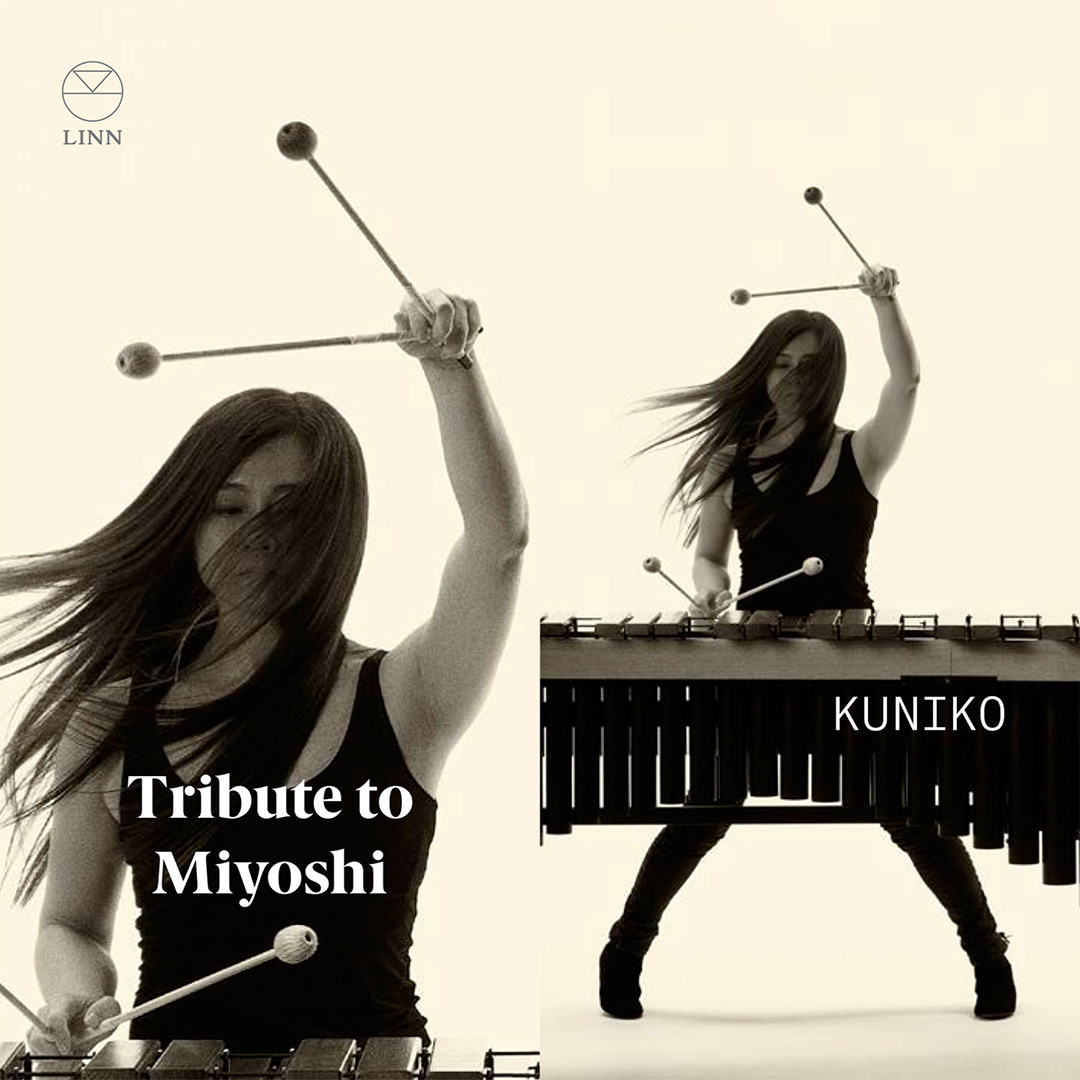
TRIBUTE TO MIYOSHI
CD – LINN CKD596
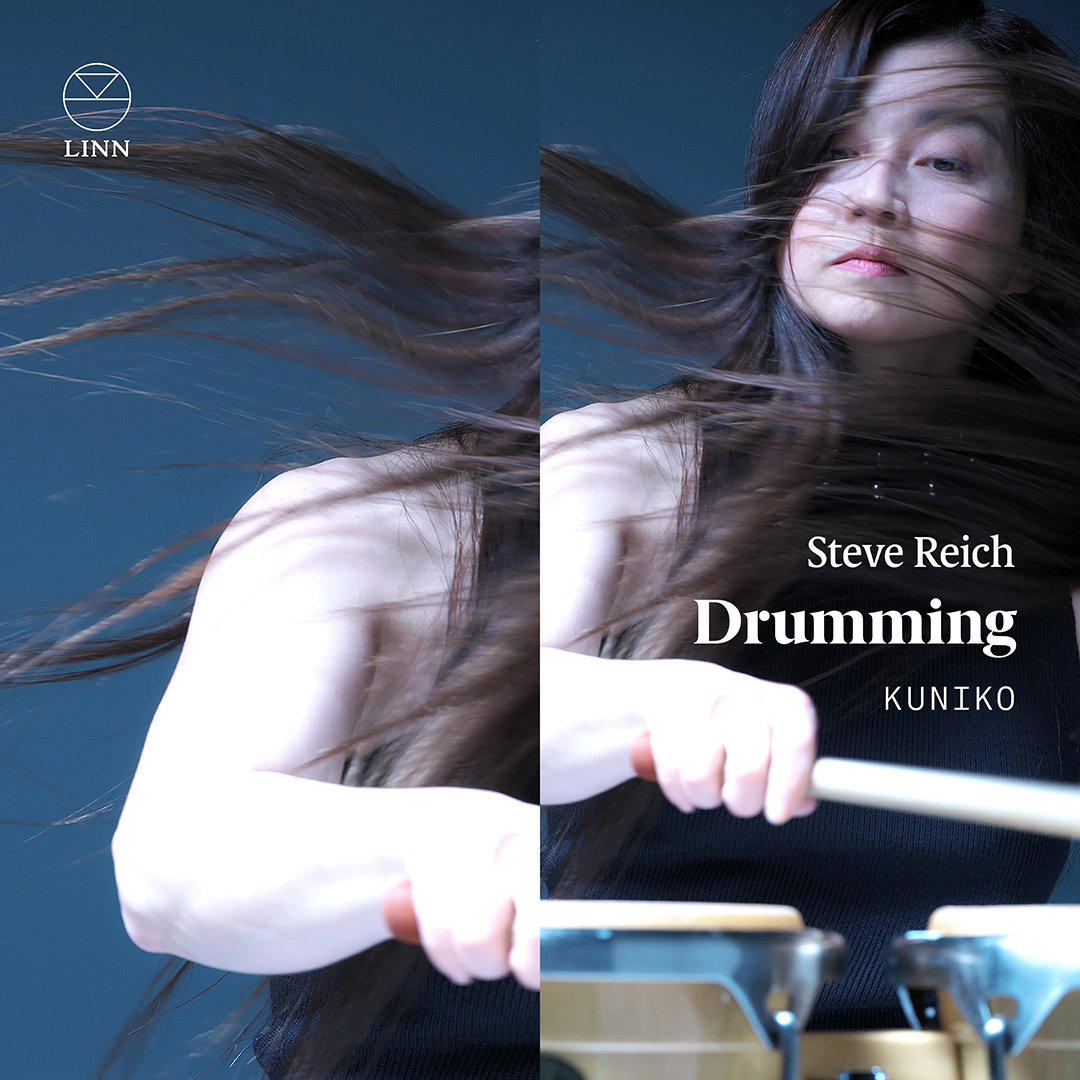
DRUMMING
CD – LINN CKD582 | 613 SACD
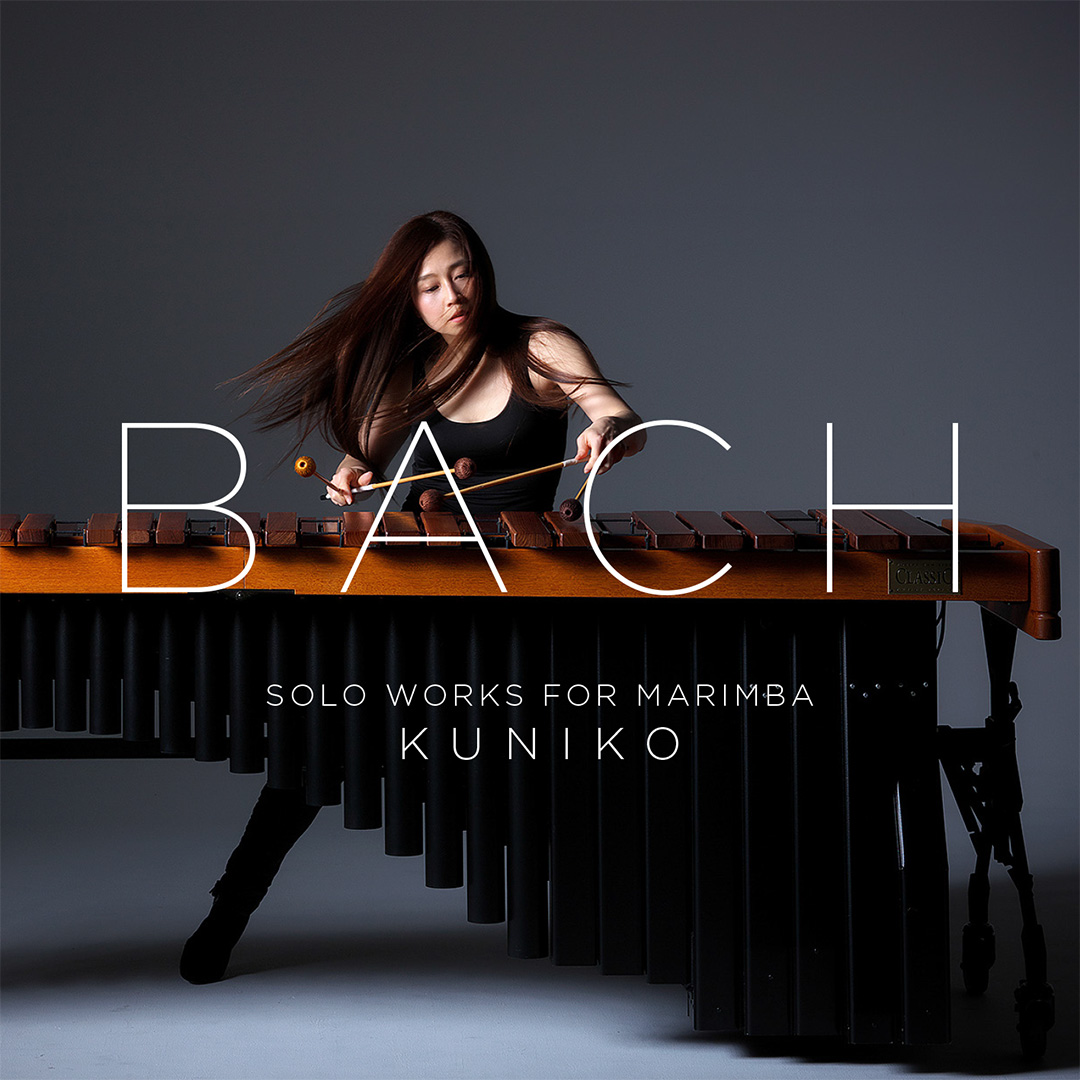
B A C H
CD – LINN CKD585 | 586 SACD

IX - IANNIS XENAKIS
CD – LINN CKD495 | 495 SACD
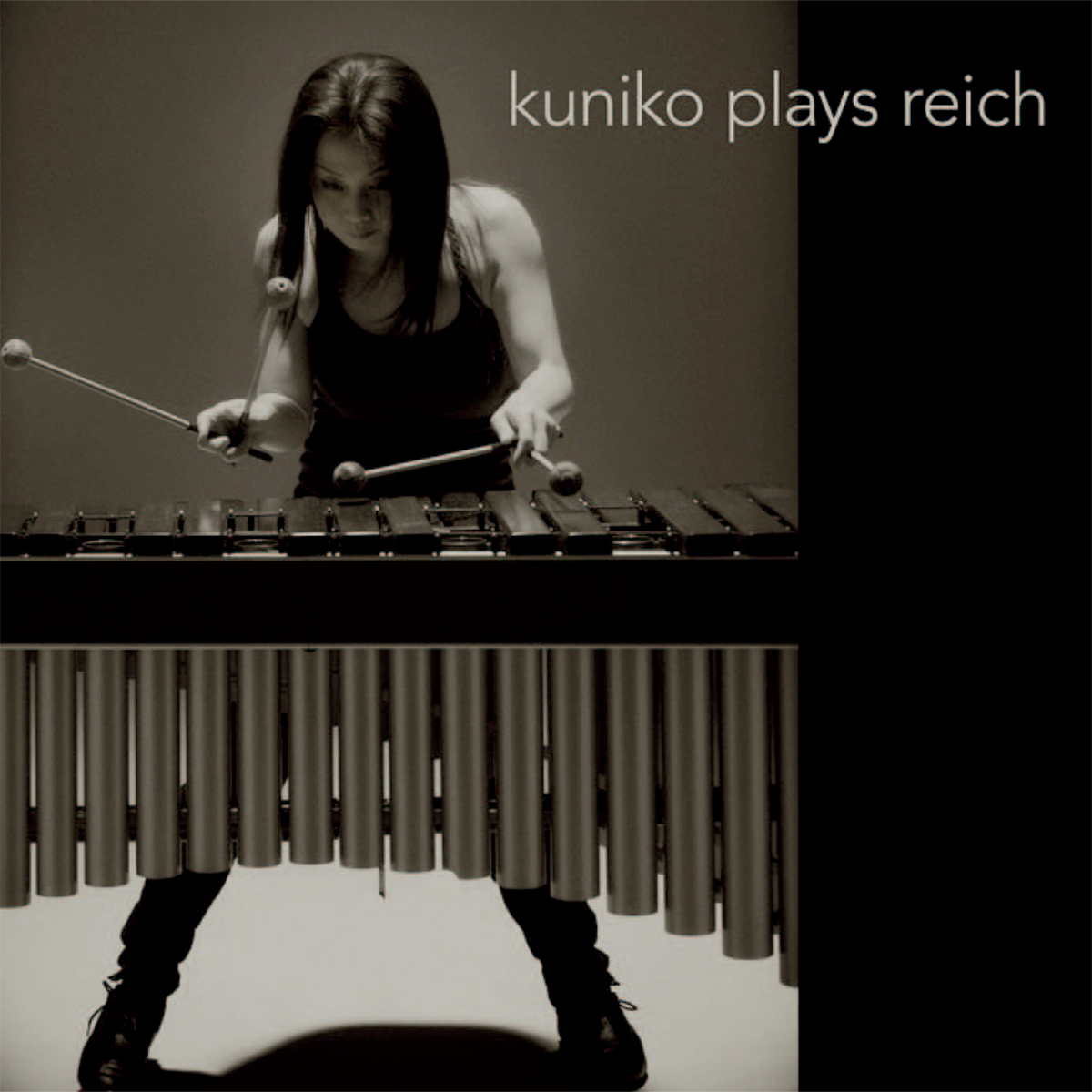
kuniko plays reich
CD – LINN CKD385 | 385 SACD
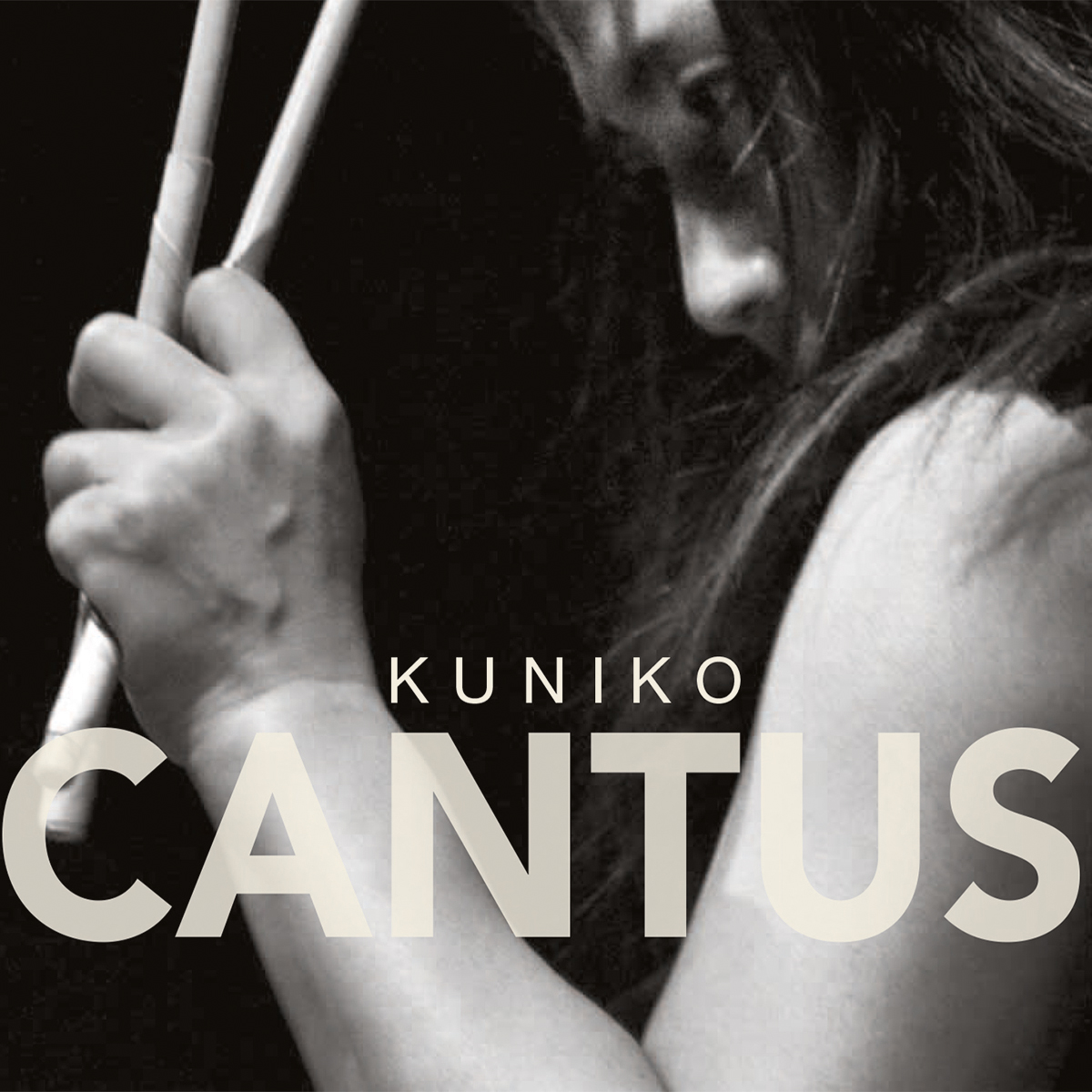
CANTUS
CD – LINN CKD432 | 432 SACD
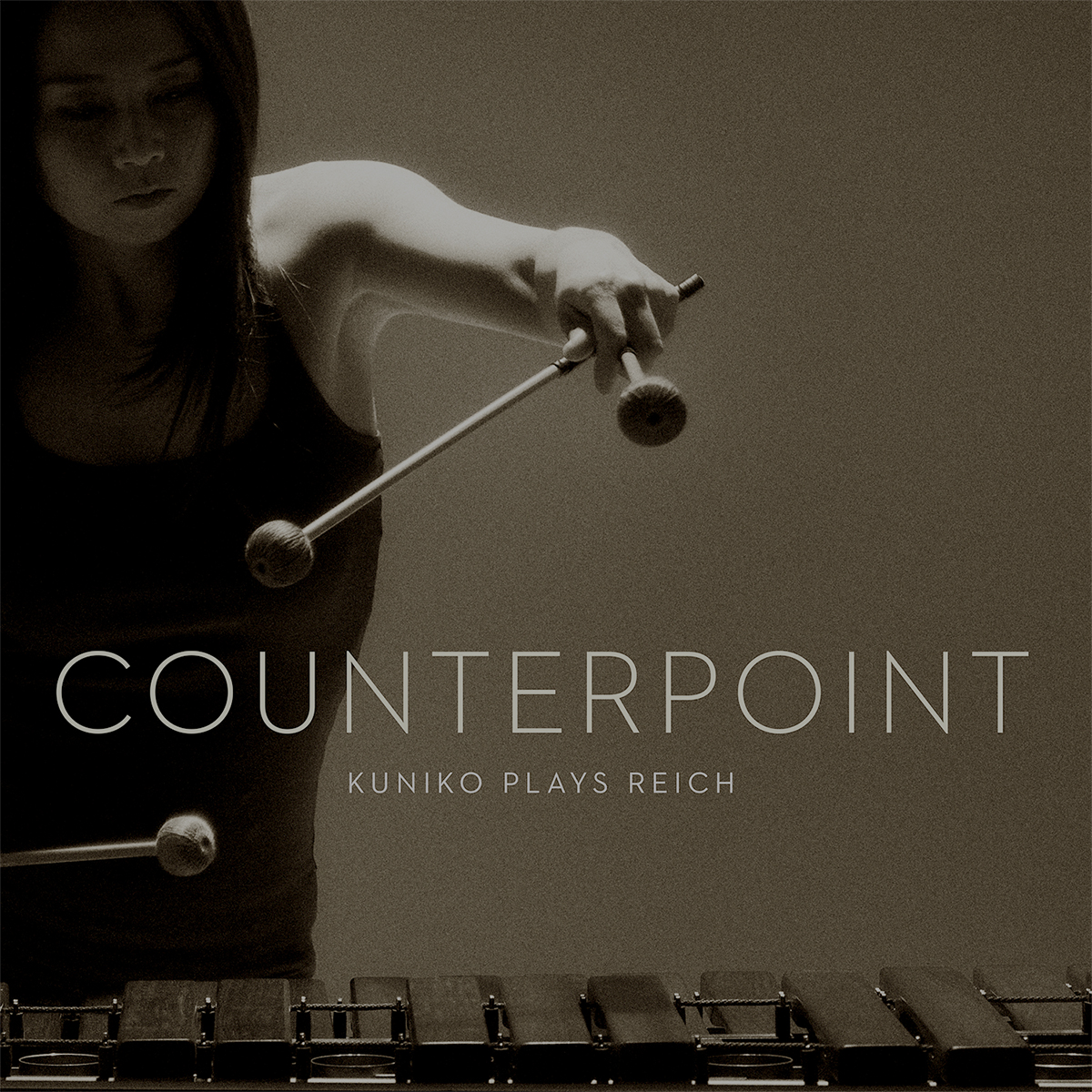
COUNTERPOINT
LP – LINN CKH485



James Wood Two Men Meet
Steve Reich - Drumming
Saito Kinen Orchestra Mahler Symphony No.2

Saito Kinen Orchestra Mahler Symphony No.9
Keiko Harada - After the winter

Volker Staub - Suarogate

Jean-Luc Fafchamps - Melencholia Si...
JO Kondo - Gardenia

JO Kondo - A Prospect of the Sky

In-Depth
Reviews
DRUMMING
Steve Reich
- Linn Records Best of 2018
- BEST OF 2018 by All About Jazz
- TOP 20 Album of the year 2018 by POLITIKEN
- 第73回文化庁芸術祭優秀賞(音楽)
- LINN CKD 582 | 613
All About Jazz
22 October 2018
All About Jazz
C. MICHAEL BAILEY
If it can be beaten with a stick, a mallet, a brush or a hammer, Kuniko beats it. The master percussionist elevates the musical art of universal percussion to a level that forces it to not only be taken seriously, but to encourage an effort to learn about it. That is the measure of an artist.
Kuniko’s previous Linn recordings, Kuniko Plays Reich (2012), Cantus (2013), Iannis Xenakis IX (2015), and Bach: Solo Works For Marimba (2017), all demonstrate her ability on the marimba, which is considerable. Steve Reich: Drumming elevates and expands her recognized talent to drumming and percussion proper, employing a composition with previous recordings to which hers may be compared. While Kuniko did not create the standard, she is setting it.
Reich’s composition requires a bit of explanation. The composer explains, “There is, then, only one basic rhythmic pattern for all of Drumming. This pattern undergoes changes of phase, position, pitch and timbre, but all of the performers play this pattern, or some part of it, throughout the piece.”
Therein lies an immediate issue. “All of the performers” refers to Reich’s original conception that this composition was intended for nine percussionists, two soprano/alto voices, piccolo, and whistler. Instrumentally, the composition requires four pairs of tuned bongo drums, three marimbas, and three glockenspiels. “Part I” is played on tuned bongo drums, as three percussionists play the head pattern, with two quarter-notes out of phase from one another. The new sections are introduced, with the new instruments doubling the exact pattern that the previous instruments are already playing. Drums, marimba, glockenspiel and vocalists: all instruments together in a percussive orgy.
Kuniko plays all parts herself, overlaying track-upon-track until the final product is achieved. Kuniko’s performance both differs from and betters previous versions in its better sonics and mathematics. Using the studio, Kuniko is able to precisely overlay each part with a precision and accuracy not achievable with multiple musicians. This is both a positive and a negative. Positive, for the purity of the result that, negatively, was achieved using the studio, perhaps a less organic approach.
All of that considered, however, the results are seventy minutes of music that make an integral sense. Surprisingly, this is not as inaccessible as some might think. Kuniko achieves the near impossible with a demanding piece, requiring dense attention and a deft touch.
Politiken
22 November 2018
⭐️⭐️⭐️⭐️⭐️⭐️
En halv time inde i forløbet er jeg i trance. Jeg griber mig selv i at sidde og lave vokallyde, der passer til den plirrende lyd af de mange køller, som rammer marimbaernes træstave, så mine knogler rasler med. Jeg lyder lidt som en tibetansk munk, går det op for mig.
Jeg er røget inde i komponisten Steve Reichs musikalske parallelunivers. Et univers af lyd, der tager mig på en rejse ud af kroppen.
I dag er Steve Reich 82 år. Men i 1960’erne og 1970’erne var han blandt pionererne inden for det, verden lærte at kende som minimalmusik. En musikalsk revolution, der kom fra USA, og som gjorde radikalt op med europæisk kompositionsmusik, som på det tidspunkt havde viklet sig ind i så komplicerede avantgarde pling plong-praksisser, at den almindelige lytter var hægtet af.
Først sprang amerikaneren Terry Riley i den modsatte grøft og skrev det pulserende stykke ’In C’ for et vilkårligt antal musikere, der var så enkelt, at nye lyttere uden problemer kunne stige om bord. Det var i 1964.
Så fulgte hans landsmand Steve Reich trop med ’Drumming’, der er skrevet for forskelli- ge slagtøjsinstrumenter suppleret med stemmer og fløjtelyde. Stykket blev til i 1971 efter en rejse til Afrika, hvor traditionelle afrikanske rytmer havde bekræftet Steve Reich i, at sådan kunne musik også lyde: som bølger, der glider ind mod kysten og ud igen, mens den ene bølge overlapper den næste, og mønstre umærkeligt skifter. Fader ind og ud. Phasing, kaldte han det.
’Drumming’ opføres som regel af 12-13 mu- sikere. Pulsen er holdepunkt i en flimrende verden, og en opførelse varer et sted mellem en lille time og op imod halvanden time.
Med tilladelse fra mesteren selv
Nu har en japaner indspillet værket. Solo. Fordi hun vil være sikker på, at alting sidder lige i øjet. Det lyder som et udspil fra en kontrolfreak, og det er japanske Kuniko Kato også. Som andre slagtøjsspillere verden over er hun vant til at fokusere på krævende kom- positionsmusik fra vores egen tid, og efter albumudgivelser med værker af Arvo Pärt og Iannis Xenakis har hun indhentet Reichs tilladelse til at indspille ’Drumming’. Helt alene.
Kuniko, som hun bare kalder sig, har gjort det, fordi der ikke var nogen solostykker for slagtøj af Reich, hvis musik hun beundrer. Hun har gjort det ved hjælp af multi-trackindspilninger og overdub, og det fremgår tydeligt af den lange ledsagetekst, hun har skrevet til sin udgivelse, at hun ikke accepterer sjusk. Alt skal være perfekt.
Det er derfor nogle meget tørre, præcise slag, der indleder Kunikos 70 minutter lange rejse hen over Steve Reichs tonehav. Men så snart tonerne begynder at forskydes og mangedobles, vækkes musikken til live, og der er flere dele af værket, Steve Reich aldrig selv har hørt spillet så præcist før, fremgår det af citater fra Kunikos korrespondence med komponisten.
Så klar en fremlæggelse har Steve Reich i det hele taget formentlig aldrig forestillet sig. Men her er den. Den er fascinerende, og på plade virker den ultimativ. Tonerne springer til alle sider som hoppebolde, og på turen fra bongotrommer via marimbaer til metalliske klokkespil er det hele tiden et ultracool indtryk, man har hængende i ører- ne. Powerfuldt, men kontrolleret.
Le Soir
02 January 2019
⭐️⭐️⭐️⭐️
Cette musicienne japonaise résidant aux Etats-Unis est une des personnalités marquantes de la percus- sion contemporaine. Sous ses doigts, Drumming demeure la page la plus fascinante de Steve Reich d’autant plus qu’elle l’aborde dans un mélange de rigueur implacable et de souplesse instantanée qui sublime ce véritable étendard de la percussion au XXe siècle.
Baker & Taylor
10 December 2019
Drumming is one of the undisputed masterworks of Steve Reich’s oeuvre, a long and complex percussion composition that thoroughly explores his early ideas of rhythmic phasing in the context of simple harmony and highly complex multilayered polyrhythms. The piece is written in four movements, which are played in continuous sequence: the first for tuned bongos, the second for marimbas and voice, the third for glockenspiels, voices, and piccolo; and the fourth for all of the instruments and voices together. Since there is some flexibility to the score (players get to decide how many repeats to follow), a performance can last anywhere from 55 to 75 minutes. Traditionally, of course, Drumming has been played by an ensemble of musicians. But for this recording percussionist Kuniko elected to perform the entire thing herself, using overdubbing techniques in the studio to create all of the necessary parts. As always–and she has already demonstrated an impressive affinity for Reich’s music–she plays with both an intensity of focus and a virtuosic precision that are unmatched in her field; under her mallets, sticks, and fingers, this music shimmers with brilliant clarity and the dense beauty of Reich’s patterns is revealed as never before. An essential purchase for all library collections.
Classic Voice - Italy
01 April 2019
⭐️⭐️⭐️⭐️⭐️
Drumming è quell’avventuroso pezzo di musica per sole percussioni scritto da Steve Reich (1936) fra il ’70 il 71 per quattro coppie di bongos intonati, tre marimbe, tre glockenspiel, flauto, voci di soprano e contralto, per un totale di dodici esecutori. Beh, la giapponese Kuniko lo fa tutto da sola, suona ogni strumento e vocalizza ogni parte, sostiene con meticolosa limpidezza, molto giapponese, uno dei più sfiancanti esercizi di slittamento progressivo della percezione mai pensati nella musica contemporanea.
Come fa? Naturalmente con un cesello di sovraregistrazioni che non toglie nulla alle richieste di disciplina ritmica del pezzo, forse le moltiplica. In tre sezioni di registrazione, all’archi Prefecutral Arts Theatre di Nagoya, l’indefettibile Kuniko si è lanciata in solitaria nel reticolo di sovrapposizione, accelerazioni, distensioni, infoltimenti e rarefazioni che Reich ha costruito a partire da un modulo ritmico unico e sempre ripetuto, mai replicando una combinazione.
Non c’è nulla di ginnastico in questa performance, solo la garanzia che una sola testa, due sole mani, un solo fiato hanno applicato al più lungo pezzo di Reich una operazione di rigore che non lascia sfuggire all’orecchio un solo accento.
La qualità della registrazione, tutta giapponese, sbalza all’ascolto un teatro di strumenti che si tocca con mano. Il movimento della foto di copertina, la finezza della grafica, la cura dell’edizione in tutte le sue parti, made in Lithuania, sono da categoria “premium”.
Per la Linn, l’indomable Kuniko ha già registrato quattro album: uno, temerario, con trascrizioni per marimba delle Suites per violoncello e Sonate per violino di Baci; uno con brani di Pärt (omaggio all’estone), uno dedicato a Xenakis e uno ancora a Reich.
Mettete in memoria: Kuniko.
HiResMac
11 October 2018
“Es zu hören war mir ein bemerkenswertes Vergnügen.” Das sagt Steve Reich über das jüngste Album der japanischen Perkussionistin Kuniko Kato, kurz KUNIKO. Der Titel des Albums: Reich: Drumming. Seine Besonderheit: Kuniko spielt, singt und pfeift alle Stimmen, Trommeln, Mallets, Töne selbst. Wie das geht? Dank Overdub.
Das Verfahren hat Kuniko schon einmal angewendet: Bei Kuniko Plays Reich, ihrem Album von 2011. Schon damals mimte die japanische Ausnahme-Percussionistin jeden Mit-Spieler selber und nahm deren Stimmen eine nach der anderen auf, indem sie über die schon eingespielten Spuren weitere legte, bis sämtliche Noten vertont waren.
Nun also Drumming. Reich hat seine Komposition in vier Teile gegliedert, die nahtlos aneinander gefügt zu spielen sind, als ein fortlaufendes akustisches Erlebnis mit wechselndem Klang-Charakter:
Teil 1 ist für vier Paar gestimmter Bongos geschrieben, die mit Stöcken gespielt werden.
Teil 2 komponierte Reich für drei Marimbas, die von sechs Spielern geschlagen werden, während sie zwei Frauenstimmen begleiten.
Teil 3 spielen vier Personen auf drei Glockenspielen, während dazu gepfiffen und Piccolo-Flöte gespielt wird.
Und Teil 4 bestreiten alle Instrumente, Stimmen und Personen zusammen.
Was das bei Kuniko bedeutet? Sie spielt und sing alles. Sie allein. Immer. Zum Glück ist Drumming die längste Komposition, die Reich geschrieben hat, je nach Wiederholungen dauert sie zwischen 55 und 75 Minuten. Kuniko bietet auf den Punkt 70 Minuten Minimal Music. Und wie sie das tut!
Fast scheint es, als sei Kuniko die natürliche Klang-Umsetzung der Kompositionen Reichs auf dem Papier. Nicht nur, dass ihr Spiel präzise ist und sie die sich stetig nur gering verändernden (Ab)Läufe wunderbar sauber umsetzt. Sie ist dabei auch noch hoch musikalisch! Alles fließt natürlich umeinander, ineinander, miteinander.
Besonders die weniger perkussiven Teile mit Marimba und Glockenspiel mit den menschlichen Zutaten Stimme und Pfeifen sind geradezu zauberhaft in ihrer Ausstrahlung und lassen mit dem Zuhörer tatsächlich geschehen, was Reich mit seiner Musik bezweckte: Nicht nur lauschen oder analysieren, sondern sich in einer bestrickenden Klangwelt verlieren können.
Kuniko hat diesen Zauber jetzt mit ihrem Massen-Solo veredelt. ! (Glückwunsch!)
BBC Music Magazine
29 November 2018
KUNIKO performs all 13 parts of Reich’s minimalist work herself, using multi-tracking to great effect. It is dynamic and less aggressive than other versions; a very calming listen.
Gapplegate Classical - Modern Music
12 October 2018
Grego Applegate
After Terry Riley’s pioneering “In C,” the stage was set for a long ensemble work that mapped out in greater depth a way to further extend such promising Minimalist trance ideas. Steve Reich had been a key early player in the development of the music with the phasing process idea as found in the electro-acoustic “Come Out,” “Aint Gonna Rain” and then “Violin Phase.” In the early days of the 1970’s he gave we who were following such developments a decided and beautiful way to proceed with the glorious work Drumming.
When the original commercial recording came out in 1974 I was fully ready for it and so it turns out were many of my peers. It happened to fall on the heels of a major uptick in my experience of World Music via a happy rising of several labels dedicated to such things. Of course there was a remarkable catalog available on Asch’s Folkways, but then Ocora, Nonesuch Explorer and a couple of other labels began releasing well-recorded LPs of traditional African and Asian musics. I was at a first peak of immersion in all of that so Drumming hit something of a nerve with me, especially in how it managed to give original treatment to the idea of a pulsating percussion ensemble with multiple interlocking parts. Perhaps rightly so much has been made of how Reich took his phase and process idea and created a wonderfully alive music out of his kernel of structural insight. And indeed it is so. But inevitably perhaps the method of proceeding had become a kind of Wittgenstein’s Ladder, or in other words it brought Reich to the new horizon of the interlocking repetition possibilities and gave him ways to ensure development. But then like the ladder that gets you to a point, there was perhaps no need to let a procedure dictate fully where one went from that place on. Or in other words the ladder was not necessarily needed any more? And it is true that subsequent works became less and less phase oriented. No matter. For in the end Drumming stood or fell on the quality of its invention, which one can hear always if one listens faithfully.
Some 48 years later, give-or-take, I certainly can say that my regard for this work has if anything increased in time. And it has done so because of a key factor perhaps–the sheer brilliance of the way Reich fashioned a diatonic pulsation of interlocking ensemble parts and in the way of so doing created, brilliantly invented music that sounds so well together that you can immerse listening self into it virtually forever! In the right hands there is an ecstasy of melodic-rhythmic suchness that you may not find quite to this extent elsewhere.
Enter master percussionist Kuniko and her new recording of Drumming (Linn CKD-582). I have heard virtually all of the versions that have come out since the first recording and they are all good. But this one is by far the best, the most inspired, the most moving I have heard. Why is that? Part of it has to do with how a master percussionist is a master. It is not of course just a matter of faithfully executing the notes. It is that something extra, that getting inside the notes and sending them volleying outward into our aural perceptual worlds that is most telling.
All of this music exists within a continually pulsating time frame. From the most simple to the very most complicated interlocking parts, a key to a successful performance is the way the ensemble can and does sound the measured, leveraged and even periodicity. Ms. Kuniko does all of that (and plays all the percussion parts via overdubbing I believe) in ways that lift the pulse into a centered measured place that, in the vocabulary of jazz, makes the time “swing” mightily. It is the transcendence of isolated repetitions in favor of a forward moving, irresistible whole that constitutes the beautiful excellence of this version over others. By getting each part measured right but then elastically so, it puts the foundations in place for a very beautiful version. For with those foundations in place it makes possible an extraordinary vital sounding of the melodic brilliance and timbral vivacity of the work. So even the first simple tuned bongo sections take on an intensity of intent. And then the crosstalk polyvalence polyrhythms (in rabbit-duck gestalt oscillations) are extraordinarily there in balanced and palpable ways that open up the entire listening universe of part-versus-part. It allows for the rabbit-duck fluidity of what you can hear and so then you can have variable focus at any point in your listening. Each part defines the whole and each sounds wonderfully well if you only listen to that. But of course your musical imagination bounces around continuously in the hearing and re-hearing of an ideal performance of the work such as we get here. The bongos, the marimbas, the glockenspiels, the female voices, the whistling and the piccolo parts sound together with a maximum groove and depth of field that has to do with the swing execution and so the work seems continually to rock back and forth between two end-phrase points (in two units of six) in a remarkably fluid and ecstatic way.
I will not try and describe the entire outlay of the work as it is performed so wonderfully well here. That is something you need to get by sitting there and letting the music play YOU. And so I recommend you get this recording and surrender to it! It is as fabulous a musical experience as you might care to have if you are willing to let the music spin you like a ballerina armature! Kuniko brings home forceably the extraordinary brilliance of this music and helps ensure its place as one of the masterpieces of New Music in our lifetimes. Kuniko is a revelation! Very highly recommended. A midwestern US resident in the mid-1800s when introduced to Beethoven’s symphonic music for the first time was said to have exclaimed, “well ain’t that something!” I would suggest that this, too, is something!
Gramophone
01 November 2018
‘A Drumming for this decade – and probably a few to come’ was my reaction to the Colin Currie Group’s recording of Steve Reich’s magnum opus earlier this year (5/18) but this newcomer from Kuniko changes the game a little.
As I noted back then, Drumming signalled minimalism’s fattening-up into something more maximal and less severe. It is an epic piece on every level, not least that of the human concentration required to play it with basic proficiency. The performance from Currie’s ensemble was possessed of a collective joy that vibrated off the secure structural mainframe. I say ‘secure’; but, of course, with 12 musicians each shimmying on to their own down-beat through a phasing process – and playing and singing with different muscles, techniques, voices and so on – absolute structural and timbral security is unattainable.
Is that part of Drumming’s thrill? Is its stretching of the very idea of ensemble playing part of what makes it buzz? I had always thought so but this performance, in which Kuniko overdubs herself on every instrumental and vocal part, is good enough to question the idea. It is still a big test but, in terms of ensemble playing, a slightly easier one: Kuniko spells out in the booklet that Drumming wobbles when its musicians can’t hear each other or attain sufficient consistency of timbre.
Unsurprisingly, we get a highly focused performance from Kuniko; less joyous than Currie’s, more zen and internalised. With each instrumental sound identical, it is all as clear as day. Kuniko’s musicianship is colossal from bongo to piccolo. The fundamental question is whether, for you, the whole minimalist project extends to sound production and forensic reproduction of the notes for the sake of clarity. Hearing Kuniko’s voice in harmony with itself, and the forest of overtone sounds that unanimity of timbre generates, it’s easy to conclude that this minimalist minimalism is truer to the cause. I relished it from start to finish and will continue to. But where this gives us fresh perspectives on the notes, a traditional performance will always have vital things to say about Drumming as a piece of ensemble music.
Musicweb International
06 December 2018
My only other recording of this work is the classic 1987 Nonesuch recording by Steve Reich and Musicians, a recording which is totally different to this one. The work is scored for four pairs of tuned bongo drums, three marimbas, three glockenspiels, soprano and alto voices, whistling and piccolo, twelve musicians in total on the Nonesuch recording, including Reich himself as percussionist and whistler. This new recording can not be more different as here we have Kuniko, a multi-talented musician, playing, vocalising and overdubbing every single part herself, in effect returning the work to the early Terry Riley concept of minimalism with repeated phrases built up on tape, a true minimalist recording then.
This recording is a virtuosic tour de force, one in which Kuniko proves that there is a different way of looking at things, a way that led Reich to say “The result is like a microscopic close up of the piece where all the details are heard with amazing clarity. I found it a remarkable pleasure to hear. Bravo!” This clarity comes partly due to the tempo, Kuniko’s version is nearly a quarter of an hour longer than Reich’s own recording and partly due to the wonderful performance. Despite the length of the recording it in no way drags, rather it is a well-paced and well executed performance. By the nature of how this version was recorded, it does lack a little spontaneity, but as she says in her notes, an ensemble recording, no matter who records it, can be affected by individuals losing or gaining pace during a performance of the piece, whereas here every part is beautifully paced and in line with every other part. This is a highly focussed performance where every detail of each phase is minutely captured with clarity and accuracy, the way Kuniko manages to capture and exploit every ebb and flow of the music is quite mesmerising, even more so than Reich’s own performance. If I miss something from the Reich performance it is the more ethereal vocalisations of Pamela Wood Ambush and Jay Clayton, but this is more than made up for by the perfection of her playing. Yes, it might not be as spontaneous and exciting a performance as Reich and friends, but the way that Kuniko manages to emphasise each, and every, phase shift is wonderful.
The recorded sound is wonderfully clear, something that helps the performance, it has been recorded over three sessions so being able to maintain the clarity and dynamic over the months that it took to record this work is a credit to the engineers and to Kuniko. The booklet notes are excellent, not only do we get Kuniko’s own notes in which she discusses the piece and her approach to it, but you also get three pages of notes on the work by Steve Reich himself. Yes, there is more than one way in which a work can be performed and Kuniko’s incredibly nuanced performance shows this. And there is certainly space on a shelf for when the performance is as compelling as this is.
FANFARE
22 April 2019
The mononymous Japanese percussionist Kuniko has made the first single-player recording of Steve Reich’s Drumming (1970—71), an extended piece that is the largest composition most directly connected to Reich’s time in Ghana in the late 1960s. The piece is usually performed by at least nine percussionists; there are also parts for several female voices, who appear in the second part. Kuniko’s recording is presumably made by overdubbing and is impressive both in the consistency required from musical performance as well as the studio production aspects. The recorded sound is extremely clear, and the technical execution of the piece is excellent.
As with most of Reich’s earlier works, the piece concerns itself almost exclusively with rhythmic phasing. The whole piece is based on a single rhythmic pattern, and it plays out across four sections that vary the percussion instruments used. I enjoy Reich’s music greatly as a listener, though it is only really with the pieces of the mid-1970s (such as the famous Music for 18 Musicians) that I begin get interested; it was at that point when Reich began to involve harmonic considerations (especially harmonic motion) in his work just as seriously as he had previous involved rhythmic considerations. In my opinion, his very best works have been selected pieces from the last decades (such as Double Sextet and You Are (Variations)) where a lifetime of his developing and refining the same musical style have paid off in excellent ways. In the past decades, he has often tended to write several pieces over a few years that explore the same conceptual ideas; usually one of those pieces of each type is the “best” one and is truly excellent.
The first recordings of Drumming were made by Reich’s own ensemble, and there have been a few others over the years (including So Percussion and ictus). Kuniko’s release was the second recording of Drumming to be released in 2018. The Colin Currie Group, led by one of Reich’s most active recent collaborators/champions, also released a version. Frankly, the differences between all of these recordings are not very extreme. Much of Reich’s work (and especially the pieces for purely percussion) leaves relatively little room for “interpretation” compared to other music, and having watched him once coach a rehearsal (as well as sit at the mixing board), he has a very particular idea of exactly how he wants the pieces played. I don’t really need more than one recording of this particular piece (to which I almost never listen, compared to my other Reich favorites). But if you’re a fan of this piece, you will probably want to have all the versions to find the subtle differences.
© 2019 Fanfare
The Times
Performances of Steve Reich’s exemplary minimalist percussion epic Drumming usually require 12 musicians: nine to hit things, three to sing, blow or whistle. However, if you are the Japanese percussionist Kuniko, you might well decide to play all parts yourself in marathon recording and dubbing sessions spread over six months. That is what happened here.
The end product lasts a miraculous, if eerie, 70 minutes. Pinprick precision? Here it is, with every layer in Reich’s tapestry cleanly delineated to a degree hard to achieve in a live concert. Reich called the result a “remarkable pleasure”, offering a startling “microscopic close-up” of his score. I know what he means, particularly when one section and instrumentation morph into the next, or when voices add their pennies’ worth to the melodic phrases generated during the rhythmic tattoo.
What you can’t get is the crackling excitement only possible with a conventional ensemble account. Compared with the recent recording by the Colin Currie Group, Kuniko’s one-woman show, though technologically breathtaking, veers towards the cool and clinical. Buy this album for reference and general ear-cleaning, not for an adrenaline rush.
RONDO
20 October 2018
Natürlich hatte es bereits vor Steve Reich amerikanische Komponistenkollegen wie Terry Riley und Philip Glass gegeben, die mit der kinetischen Kraft von kleinen Melodie- und Rhythmus-Zellen experimentiert hatten. Doch Reich sollte seine Entdeckung der „Phasenverschiebung“, bei der ein ständig wiederholtes Melodiemodell sich allmählich gegeneinander verschiebt, in ungemein raffinierten Werken verarbeiten. Zu den rein akustischen Manifesten dieser „Phasenverschiebung“ und überhaupt der Minimal Music gehört „Drumming“, das Reich nach einem Aufenthalt in Ghana 1971 beendete. Diese Reise hatte ihn in seiner „intuitiven Erkenntnis“ bekräftigt, „dass man mit akustischen Instrumenten und Stimmen Musik von größerem Klangreichtum hervorbringen kann als mit elektronischen Instrumenten, und sie bestätigte zugleich meine natürliche Vorliebe fürs Schlagzeug.“ Über eine Spielzeit von bis zu 90 Minuten lang widmet sich normalerweise ein Ensemble aus zwölf Percussionisten den vier großen Abschnitten von „Drumming“. Zudem imitieren immer wieder menschliche Stimmen das Schlagzeug. Doch jetzt hat auch mit Zustimmung des Komponisten die japanische Schlagzeugerin Kuniko eine Solo-Version eingerichtet und per Overdub-Verfahren eingespielt. Und dabei ist es der Neue Musik- und auch ausgewiesenen Steve Reich-Spezialistin Kuniko nicht allein gelungen, die mikroskopische Komplexität der einzelnen, sich auch zwischen Welt- und Maschinenmusik bewegenden Stimmen mit der Präzision eines Uhrmachers im Aufnahmestudio zu verzahnen. Zugleich hat sie einen magischen Flow angeschoben, der sich im finalen 4. Abschnitt mit Marimba, Glockenspiel und Bongo in ein spektakuläres Schlagfeuerwerk hineinsteigert. Toll.
NIKKEI STYLE
B A C H
SOLO WORKS FOR MARIMBA
- Linn Records Best Selling Album of the year 2017.
- 第10回CDショップ大賞2018(クラシック)
- LINN CKD 585 | 586S
Audiophile Audition
09 August 2017
Audiophile Audition
Fritz Balwit
⭐️⭐️⭐️⭐️⭐️
On the phylogenetic tree of musical instruments, in terms of sound production, the ancient marimba would be a low branch. Its massive limb juts out with no further developments, fundamental, but non-dynamic in its organizing principles. Its evolutionary equivalent in biology might be the turtle, changeless and serene in its formal perfection. While the dinosaurs demonstrated a baroque inventiveness in the areas of feather and beak with spectacular results, the turtle didn’t wish to press its luck, preferring to stay inside its shell, the very symbol of conservatism. So it has been with the marimba: it remains a piece of wood perched on a sounding device, hit with a stick. (The evolutionary relationship of the marimba to the vibraphone is a matter of debate.)
A hypothetical scenario of its origins comes readily to mind. By chance, a man hits a hollow log with a stick and then the larger log alongside with the stick in his other hand. Insight dawns as he arrives at the essential relation of sound production to geometry. It is only a matter of time until woman, the eternal improver, places her hollow gourd or turtle shells under the now tone-selected pieces of wood; and with that, a new sound wafts out into the African night, startling and beautiful.
From its place of origin in Zimbabwe, the marimba made the transatlantic journey with the African diaspora, arriving in Central America where the first diatonic marimba, still equipped with the gourd resonators, was documented by Domingo Juarraz in 1680. Its subsequent evolution concerns itself with the expansion of the range of the instrument and the amplification of the sound through modifications of the resonator apparatus. Today’s marimbas range up to five octaves and have replaced the gourds with aluminum and more recently even PVC tubing.
The performance at hand is not the first time Bach has been recorded on the marimba. It’s also not uncommon to hear a street musician toss off one of Bach’s little preludes and fugues or a two-part invention on such a mallet instrument. The effect is typically a kind of cheerful novelty act: dancing, Caribbean, rum at sunset conviviality. Kuniko, a Japanese virtuoso, aims at going well beyond this standard with a profound rendering of the serious repertoire for solo violin and cello as well as two preludes from the Well-Tempered Clavier. Perhaps her only concession to familiarity and amateur accessibility is the (overly) well-known Suite No.1 in G major.
Kuniko asserts the radical notion of the marimba as sui generis sound which stands adjacent and not inferior to any other form of plucking, bowing, or wind. Indeed, her performance yields an entirely original presentation of both the instrument and Bach’s genius.
Throughout, she focuses the deeply resonant sound of her instrument (about which no details are available in the fluffy liner notes) on the contrapuntal and melodic power of this music. She opts not to make these dance suites dance; the minuet and the gigue and fleet courante are all played with measured contemplation. Kuniko avoids lethargy and somnambulism by means of her exquisite rhythmic finesse. No lines are ever blurred, and the subtlest use of rubato gives the most pleasing shape to phrase, evoking sway and movement at every turn.
The transcription is modest in terms of fleshing out the implied harmonies, especially compared with lute and guitar versions of these works. Yet one wouldn’t want any added notes. It cannot be overstated how big this sound is. It fills the room and vibrates bones and internal organs. On Prelude of Cello Suite No. 5 she layers this sound while navigating the two voices with an implied third line, casting a mesmerizing seven-minute spell. Another feature worth noting is her use of ornamentation, idiomatic to mallet techniques and full of surprises. The fifth suite is a big work, and not the one that you can encounter daily on the High-Line in NYC or in front of Starbucks in your average college town, as you might the first two “easy” suites. You will never hear it played quite like this, with the combination of resonant wood and introspection that is Kuniko’s own patent.
The second disc opens with the C minor prelude from the WTC. Made famous by guitarists, it makes far more sense for this instrument. Why she omits the fugue is a puzzle. We don’t have to wait long, however, for the first of three great fugues. Each of the violin works has a second movement fugue. More than anything else, these are the pieces that separate Kuniko from her rivals–and not only mallet players, for it is not easy to hold these polyphonic movements together on a solo instrument. It helps that she has four mallets, but the key is in the concentration, all the more important as she takes the pieces extraordinarily slowly. (the Fuga of BWV 1003 is 9:56 compared to Oscar Shumsky at 7:45).
The Sonatas BWV 1001 and 1002 are both in minor keys, which adds to the brooding introspection. Every so often in the upper end of the instrument, the rapid quavers of the mallet conjure up the organ at its most rarified. On the Andante of the A minor work, the quavers float like steel pans. We are very far away from the violin and the acidulous double-stops which are inescapable in the famously difficult sei solo.
If I had to choose one instrument to realize the magnificent Violin Sonata No. 3 in C major, it would be the lute. (Consider the memorable recordings by Hopkinson Smith and Nigel North, the latter on this same label.) But the marimba would be my second choice, well ahead of the violin.
The final demonstration of Kuniko’s art, as well as the Kapellmeister’s deep science, unfolds in the 12-minute fuga of BWV 1005. Never has the ponderous harmonic tension been borne aloft so easily; it is a summation and the final ascension of these grand works. The final Allegro assai has the marimba racing along, all four mallets warbling up a terrific chorus of semi-quavers. For sonics, this would be my demonstration piece, the full range of the instrument on marvelous display–along with the technical prowess of this gifted artist.
To add one more bit of context to an already improbable circumstance of this recording, we should mention that it was recorded in the 13th-century Jaani Kirik, (St. John’s Church) in Tartu, Estonia. That is a long way from Japan, but Ms. Kuniko explains that she “likes the air and the feel.” Who are we to argue? The air and feel of this recording are something extraordinary.
All About Jazz
15 July 2017
All About Jazz
C. MICHAEL BAILEY
⭐️⭐️⭐️⭐️⭐️
Johann Sebastian Bach. His music is a cornerstone of Western Civilization. On reason Bach’s music has had staying power in our quickly evolving culture is its durability. Bach’s music has been effectively framed by vastly different instrumental approaches. These include Vittorio Ghielmi’s near-the-intent viol consort approach to The Art of Fugue (Winter & Winter, 2009), through Uri Caine’s reconstructed Goldberg Variations (Winter & Winter, 2000), all the way to Bill Cunliffe’s BACHanalia (Metro, 2017). That is an impressive breadth of interpretation and Bach’s music holds up to all of it.
Enter now, percussionist Kuniko (Kato) with her marimba treatments of selected Bach preludes and suites, Bach: Solo Works for Marimba and this tent of interpretation grows ever larger. Hot on the heels of accordionist Mie Miki’s bold and far-reaching Das Wohltemperierte Akkordeon (BIS, 2017), Kuniko’s perfomances can be heard as an important addition to the long tradition of alternative Bach performance. While the marimba might seem an unlikely instrument for Bach, it is no less likely that Miki’s accordion, or Glenn Gould’s piano performances of the Goldberg Variations. It is a fairly clean evolution over percussive “keyboard” instruments.
Kuniko’s most recent recordings gave survey to 20th Century minimalism. Her debut recording, Kuniko Plays Reich (Linn Records, 2012) addressed the music of American composer Steve Reich, with whom the percussionist collaborated closely during the recording. The project provided illuminating performances of Reich’s “Electric Counterpoint” (1987); “Vermont Counterpoint” (1982), and “Six Marimba Counterpoints” (1986). The percussionist followed up with Cantus (Linn Records, 2013), featuring, in addition to Reich, music by Arvo Pärt and Hywel Davies. Kuniko’s last recording was her most ambitions, Iannis Xenakis IX (Linn, 2015), focusing on the music of Franco-Greek composer Iannis Xenakis.
Taking a Baroque step backwards, Kuniko addresses some well-known music of Bach with the same crystalline precision she has demonstrated on her earlier recordings. The pieces the percussionist chooses are tried and true: The opening prelude of The Well-Tempered Clavier, The Cello Suites Nos. 1, 3, and 5, and the first three Violin Sonatas. These will be readily recognizable to many listeners. Hearing these pieces, these notes played is succession on the marimba produces the two-fold effect of softening Bach’s sharp edges and redefining the marimba as a viable classical music instrument. The sound of the marimba is organic, wooden, something like a vibraphone played and heard under water. It is a pleasant and soothing sound, one well attuned to Bach’s music. That said, the dynamic of the marimba are necessarily narrower than the original instruments for which the pieces were composed. This is a plus in the respect that these marimba pieces really display the bones of Bach’s working, showing just how integral this music is and what a fixed part of our collective cultural unconscious. Kuniko’s performances are a mathematical and physical wonders, revealing Bach as never before in all his fecund possibility.
The Whole Note
29 August 2017
The Whole Note
Raul da Gama
Playing any classical music on the marimba would have been unthinkable before 1892. After all it was only then that the instrument was equipped with additional notes to include the chromatic scale by adding another row of sound bars, akin to black keys on the piano. However, playing Bach on the marimba – if not unthinkable – would still be enormously thought-provoking, but not challenging enough, it seems, for Kuniko, a profoundly brilliant virtuoso at home on both keyboard and percussion instruments. Still, even the fact that she has performed and recorded the music of Iannis Xenakis and Steve Reich could not have been sufficient for approaching these masterworks on Bach: Solo Works for Marimba.
Approaching the Prelude No.1 in C Major from the Well-Tempered Clavier, a work unequalled in the profligacy of its inventiveness, sets the tone for this exquisitely sculpted music by Kuniko. The result is a fascinating opening, with its sprightly dance-like passages and concise melody creating myriad resonances and perspectives for the cycles of Cello Suites and Violin Sonatas that follow. Here the mallets lead the ear, cherishing motivic snippets, highlighting arresting harmonic progressions with crystalline articulation. Kuniko’s enormous insight into Bach and her own limitless inventiveness make for muscular, exhilaratingly voiced and contrapuntally lucid performances of the solo works for cello and violin, in which harmony and counterpoint are implied through frequent spreading of component notes. A bedazzling set of discs, singing with innate beauty.
Classical IPR
28 August 2017
Classical IPR
Amanda Sewell
Classical IPR’s New Release of the Week features familiar music in a new and surprising interpretation. Marimbist Kuniko performs her own arrangements of the music of Johann Sebastian Bach in Bach: Solo Works for Marimba.
The two-disc album of Bach’s music is over 150 minutes in length. Kuniko’s arrangements include three of the Cello Suites (numbers 1, 3, and 5) and all three of the sonatas for solo violin. Each CD opens with a transcription of a keyboard prelude.
In the liner notes for the album, Kuniko writes that she imagines her performances inspiring people to dance at a social occasion. Each piece on the album includes a similarly evocative statement about how she feels about the music, where she heard it for the first time or what she imagines when hearing it.
Kuniko recorded the album in St. John’s Church, a thirteenth-century church in Tartu, Estonia. She writes in the album’s liner notes that the sound in this medieval church is something that cannot be achieved anywhere else in the world.
Crescendo
25 July 2017
Crescendo
Dominique Lawalrée
⭐️⭐️⭐️⭐️⭐️
Son 10 – Livret 8 – Répertoire 8 – Interprétation 9
Le son du marimba est lié à la musique de Steve Reich. Naturellement, on trouve donc dans la discographie de la percussionniste japonaise Kuniko (Kato) un album dédié à ses propres adaptations d’oeuvres du compositeur minimaliste américain, approuvées par le maître. Elle est aussi l’interprète éblouissante de deux oeuvres de Xénakis, Pléïades et Rebonds, enregistrées sur un autre album (tous chez Linn). C’est une musicienne rompue aux langages contemporains (elle joue aussi Takemitsu et James Wood), puisqu’elle a fait partie de l’ensemble belge Ictus. De là à faire des adaptations de Bach, il y a une marge … qu’elle franchit avec une belle dose de philosophie, dont elle fait part dans un magnifique texte de présentation (uniquement en anglais). Sa démarche, qui mérite d’être écoutée une fois acceptée, est tout sauf fantaisiste, et encore moins commerciale. Ce qui paraît incongru est en fait très musical. Les sonorités chaudes dans le grave, séduisantes dans le medium et délicatement percussives dans les aigus s’adaptent parfaitement à la musique contrapuntique de Bach. Chacun des deux disques débute par un prélude, suivi pour l’un par les suites pour violoncelle, et des sonates pour violon pour l’autre. Le danger est que cela devienne lassant. C’est pourquoi il est déconseillé d’écouter ce double disque d’une traite. Mais cela n’enlève rien à ses qualités.
HiResMac
12 July 2017
HiRes Mac
Tom Semmler
So hatte sich das JSB gewiss nicht gedacht – weder, dass er JSB abgekürzt werden würde, noch dass eine Marimba sein Werk präsentiert. Und doch ist Johann Sebastian Bach beides passiert, das eine von mir, das andere von Kuniko. Die japanische Mallet-Spielerin hat sich eine Reihe von Kompositionen geschnappt und für ihre Marimba arrangiert. Macht 33 einzelne Stücke, darunter drei Violinen-Sonaten, drei Cello-Suiten, ein Prälüdium und der erste Satz aus dem Wohltemperierten Klavier. In Summe: gut zweieinhalb Stunden Spielzeit.
Zugegeben, man sollte es schon wollen. Bach ist ja ob seiner inspirierenden Variation über das Gleichförmige durchaus dem ein oder anderen schon per se nicht ganz geheuer. Das ganze nun auch noch auf ein einzelnes Instrument zu reduzieren und zudem auf eines, das feinfühlig mit Schlegeln traktiert wird, könnte manches Gemüt gewiss überfordern.
Auch ich bin nicht frei davon, diese musikalische Darbietung als Experiment klassifizieren zu wollen. Aber es klappt nicht. Schuld daran ist zum einen, dass ich nicht das gesamte Bach’sche Œuvre auswendig kenne, und zum anderen, dass Kuniko offenkundig weiß, was sie tut.
Dass ich Bachs Werke nicht in tutto verinnerlicht habe, kommt dem Experiment insofern zu gute, dass ich nicht für jedes der Stücke einen Klangvergleich im Kopf habe, eine Art Akustik-Norm, die schon mit dem ersten Ton schreit: “Nee nee nee! So soll das doch gar nicht klingen!”
Das ist nämlich beim Begrüßungsstück The Well-Tempered Clavier-Book I: Prelude No. 1 in C Major, BWV 846 (arr for Marimba) der Fall, das als Dauerbrenner der deutschen Klassik-Hitparade praktisch schon zum Genpool tetonisch-stämmiger Renzensenten gehört. Nee nee nee! Oder doch?
Es braucht etwas Zeit zum Einhören. Und dann, nach den dritten Hören, offenbart und erschließt sich plötzlich allerhand, das die Aufmerksamkeit fesselt: Zuvorderst der Marimba-Klang. Da ist zum einen der üppige Ton an sich. Dazu das Holz als Klangobjekt, was für die Güte der Aufnahme spricht. Und dann die Tiefe, in die das Schlag-Instrument hinunter-kellert. Bummmmm. Sacht-weiche Überraschungs-Gaben.
Auch sonst ist Überraschung-Potenzial gegeben – nehmen wir als Beispiel die Cello Suite No. 1 in G major, BWV 1007: V. Menuett I & II: Reduziert zum einen, offen und voll zum anderen. Die Akustik der Aufnahme stellt die Marimba naturgetreu in den Hörraum, in voller Breite, greifbar und sichtbar.
Ihr Klang indes ist vom Attack punktuell, von der Fülle in einer Kapelle eingebettet. Das macht die Töne transluzent, entkrampft die Darbietung wunderbar und entschlackt sie von gelehrigem Ballast, der nur allzuoft in Bach-Spielen sein Unwesen treibt. Und hier liegt dann auch die wesentliche Qualität von Kunikos Re-Arrangements: Sie öffnet die Bach’schen Kompositionen durch Reduktion.
Nach Arvo Pärt und Steve Reich ist Kuniko auch der Versuch an His Compositorial Highness Johann Sebastian Bach gelungen. Wobei der Zuhörer weiterhin gewillt sein sollte, sich neuen Klangerfahrungen zu öffnen, weil die Aufnahme sonst einfach nur zwei nervige Stunden voller Holzgetön zur Folge hat.
Aufgeschlossenere Charaktere werden dagegen einen neuen Zugang zu Bach finden, der auch den Rücksprung in die bereits bekannten Darbietungen bereichert und manches mit anderen Ohren hören lässt. Somit: ein lohnender Gewinn an Klang und Erkenntnis gleichermaßen.
Audio Accessory Japan
Tadashi Yamanouchi
‘An excellent performance which lets us hear the chords inherent in Bach’s unaccompanied works.’
Crescendo - Germany
01 October 2017
Crescendo
MV
The acclaimed percussion virtuoso Kuniko goes it alone, so to speak, in an impressive multitracked performance of Xenakis’s four-movement, 40-minute 1975 percussion ensemble work Pleïades. Although Kuniko calibrates balances, dynamics, nuances and sonorities with her expected precision, she also creates a genuine sense of repartee between the parts, as if the six original percussionists were interacting. The subtle contrast between the third movement’s resonating and non-resonating mallet instruments is particularly telling, as are the sounds of the different-size drum heads throughout the fourth movement. Reviewing the recording by Les Percussions de Strasbourg (Denon, 1/90), Arnold Whittall wrote that ‘each movement is too long to sustain unflagging interest in what is essentially a music of rhythm and colour rather than, in the widest sense, of ideas,’ and I have to agree with his assessment.
These words also apply to Rebonds for solo percussion, although there are many striking moments (pun intended!) such as Part A’s asymmetrical flourishes. Mastering the composer’s complex and multi-level rhythmic notation and pinpoint dynamic indications may well represent a kind of rite of passage to percussion virtuosos. Kuniko passes this rite triumphantly. Her effortless, glitch-free technique and ability to manipulate mallets and sticks to seemingly coax melodies from non-melodic instruments are bound to humble aspiring and established percussionists alike. Her clear, descriptive and often personalised annotations refreshingly contrast to Xenakis’s convoluted and rather off-putting programme note for Pleïades.
BBC Music Magazine
‘Kuniko’s voluptuous marimba…cloaks the music in an all-consuming glow…The sheer technical elan she brings to the violin fugues, however, is jaw-dropping…’
Baker & Taylor
08 August 2017
Baker & Taylor
Rick Anderson
Obviously, J.S. Bach didn’t write any solo works for the marimba—these are transcriptions by the always-amazing Kuniko Kato, whose previous albums have included arrangements for marimba of works by Steve Reich, Iannis Xenakis, and Arvo Pärt. Here she takes a deep breath and confronts the granddaddy of keyboard masters, transcribing and performing arrangements of three cello suites, three violin sonatas, and the opening prelude from The Well-tempered Clavier. As always, her playing is masterful—not only her sheer technique, but also her emotional investment; her love and admiration for this music is expressed almost viscerally. There may be moments when you wish the marimba’s attack were a little bit sharper and the note separation more distinct, but there is never a moment when the music isn’t beautiful. For all classical collections.
NAXOS Deutschland
31 July 2017
Naxos Deutschland
Die japanische Perkussionistin Kuniko (ihren Nachnamen Kato führt sie als „Stagename“ nicht) gehört zu einer neuen Generation von Künstlern und Künstlerinnen, die Musik außerhalb der gängigen Schubladen begreifen und sich sowohl dem Gehalt der Musik verpflichtet sehen, wie der Möglichkeiten der künstlerischen Umdeutung und Umformung. Ihr Instrument, die Marimba, ist keines, für das es ein großes klassisches Werk gäbe. Die Notwendigkeit sich ein eigenes Repertoire zu schaffen, sprich zu transkribieren, ist also fast immer der Ausgangspunkt im schöpferischen Prozess der Japanerin.
Nach Alben mit zeitgenössischen Werken von Reich, Pärt und Xenakis hat sich Kuniko nun erstmalig (auf einem Album) der „alten Musik“ Johann Sebastian Bachs zugewandt. In ihren Live-Programmen war die Musik Bachs stets präsent. Transkriptionen der Cellosuiten Nr. 1, 3 und 5 und der Violinsonaten Nr. 1–3 stehen im Zentrum des neuen Doppelalbums. So ungewöhnlich die Wahl des Instruments, eben die Marimba, so nonkonformistisch sind auch ihre Bearbeitungen, ihre Wahl der Tempi und ihre Interpretationen. Dies vorab: Für Puristen ist dies sicher kein empfehlenswertes Album. Sie werden entsetzt die Hände über dem Kopf zusammenschlagen und Kunikos Musik als „Sakrileg“ brandmarken. Sicher: historisch-informiert auf Originalinstrumenten kann Bach auf der Marimba eben nicht sein. Aber bedeutet das, dass man Bach nur so spielen darf, wie wir heute glauben, dass er zur Entstehungszeit gespielt wurde (auch wenn sich diese Auffassung ständig verändert)?
Kuniko nimmt sich ausdrücklich die Freiheit, „ihren“ Bach zu spielen (»This music has become my Bach, and I will continue to perform it.«) und wer ihrem Weg folgt, der entdeckt durch ihre Deutungen einen ganz neuen Bach: Ihr Spiel ist (naturgemäß) perkussiv, gleichzeitig sehr nuanciert, sanft und bemerkenswert non-legato, wie es Glenn Gould sicher erfreut hätte. In ihren gemäßigten Tempi erlaubt sie sich Modulationen und Synkopierungen; nicht Schnelligkeit ist Trumpf, sondern der Klang jeder einzelnen Note wird zum Gegenstand der Betrachtung. Bachs Streicherwerke werden auf der Marimba zum plastischen Objekt, dessen Kontrapunkt quasi dreidimensional wahrgenommen werden kann. Was in den Originalen für die Streichinstrumente naturgemäß fließt, schreitet in Kunikos Marimba-Fassungen unwiderstehlich voran. Das macht aus den wohlbekannten Stücken fast neue Bach-Werke, die gleichsam fremd und doch vertraut sind. Ein direkter Vergleich mit den „Originalen“ auf Cello bzw. Violine ist nicht zwingend notwendig. Kunikos Bearbeitungen sind auch ohne Vergleich mit der Referenz purer Bach, die vor allem Hörer ansprechen werden, die neben den mathematisch-architektonischen Meisterwerken des Thomaskantors auch ein Faible für die neuen Ausdrucksformen der zeitgenössischen Musik haben.
Die perfekte Klangqualität der Aufnahmen (sie entstanden in der Jaani Kirik im estnischen Tartu), und die lesenswerten persönlichen Anmerkungen im Booklet runden das sehr positive Bild einer äußerst ungewöhnlichen Veröffentlichung ab.
Gramophone
01 October 2017
Gramophone
Harriet Smith
The marimba player Kuniko wisely focuses on the Cello Suites and Solo Violin Sonatas, works that would seem to lend themselves more readily to transcription than, say, the more intricate textures of the keyboard Partitas. She contributes highly personal notes in the booklet about what Bach means to her, offering a very specific narrative for every piece she chooses.
That relaxed, effortless flow of sound is enticing with Kuniko’s toothsome transcriptions for marimba of Bach solo works (Linn), the resonance and tonality of the instrument and the feeling of the space in which it was recorded being strikingly resolved.
Klassieke Zaken
03 April 2017
Klassieke Zaken
Paul Janssen
Dat het werk van Bach doorgaans geheel in de geest van Bach bewerkt wordt voor andere instrumenten is geen nieuws meer. Toch heeft de Japanse percussioniste Kuniko Kato, kortweg Kuniko, een lang verhaal in het cd-boekje nodig om te verklaren waarom ze twee cd’s volspeelt met het werk van Bach. Misschien omdat ze het uitvoert op de marimba, ook in de hedendaagse klassieke muziek nog altijd een ‘jong’ instrument. Of omdat ze eerdere cd’s vooral wijdde aan het werk van twintigste-eeuwse grootheden als Reich en Xenakis. Hoe dan ook, Kuniko heeft al die woorden niet nodig. Even luisteren naar bijvoorbeeld de prelude van de eerste cellosuite is genoeg om volledig in de ban te raken van haar spel. Puristen op zoek naar een ‘authentieke’ uitvoering vinden weinig van hun gading, maar wie een sensationele, intense en vooral poëtische Bach wil horen is bij deze Japanse aan een heel goed adres. Kuniko speelt de drie cellosuites en evenzovele vioolsonates van haar keuze over het algemeen langzamer dan Bach meestal wordt uitgevoerd, maar dat heeft tot voordeel dat het web van melodielijnen zich volledig kan ontwikkelen en dat luisteren naar Bach hier twee cd’s lang een vorm van pure meditatie wordt.
Record Geijutsu Japan
Miyuki Shiraishi
‘Counterpoint that clearly floats and beautiful harmony that blends.’
IX
Iannis Xenakis
- 日本レコードアカデミーダブルノミネート・現代音楽部門・録音部門
- NPR Music’s Favorite Songs of 2015 (USA)
- LINN CKD 495 | 495S
The Sunday Times
03 May 2015
The Sunday Times
Stephen Pettitt
The Japanese known only by a single name offers two long-established Xenakis masterpieces. Those who already know Pleiades (1978) will wonder how, since these four movements (three of them for particular timbre groups) are intended for an ensemble of six. The answer? Multitracking. No need for such ingenuity in Rebonds (1987-89). These are meticulous and muscular performances, at once elemental and elegant. Brilliant.
Gramophone
01 June 2015
Gramophone, Jed Distler
The acclaimed percussion virtuoso Kuniko goes it alone, so to speak, in an impressive multitracked performance of Xenakis’s four-movement, 40-minute 1975 percussion ensemble work Pleïades. Although Kuniko calibrates balances, dynamics, nuances and sonorities with her expected precision, she also creates a genuine sense of repartee between the parts, as if the six original percussionists were interacting. The subtle contrast between the third movement’s resonating and non-resonating mallet instruments is particularly telling, as are the sounds of the different-size drum heads throughout the fourth movement. Reviewing the recording by Les Percussions de Strasbourg (Denon, 1/90), Arnold Whittall wrote that ‘each movement is too long to sustain unflagging interest in what is essentially a music of rhythm and colour rather than, in the widest sense, of ideas,’ and I have to agree with his assessment.
These words also apply to Rebonds for solo percussion, although there are many striking moments (pun intended!) such as Part A’s asymmetrical flourishes. Mastering the composer’s complex and multi-level rhythmic notation and pinpoint dynamic indications may well represent a kind of rite of passage to percussion virtuosos. Kuniko passes this rite triumphantly. Her effortless, glitch-free technique and ability to manipulate mallets and sticks to seemingly coax melodies from non-melodic instruments are bound to humble aspiring and established percussionists alike. Her clear, descriptive and often personalised annotations refreshingly contrast to Xenakis’s convoluted and rather off-putting programme note for Pleïades.
BR Klassik
02 June 2015
BR Klassik ‚,Leporello‘‘
Der griechische Komponist Iannis Xenakis hat einige der wichtigsten Schlagzeug-Werke des 20. Jahrhunderts geschrieben. Zwei davon hat die japanische Perkussionistin Kuniko Kato, die sich einfach “Kuniko” nennt, jetzt für das schottische Label Linn Records eingespielt.
Wie klingt es, das Funkeln einiger hell leuchtender Sterne am Nachthimmel? “Pléïades” – so heißt eine Komposition von Iannis Xenakis – Plejaden, das ist eine Sternformation, ein Teil der Milchstraße. Iannis Xenakis hat einen Satz seines Werks für ein Instrument geschrieben, das er “Sixxen” genant hat. Er hat dieses spezielle Metall-Glockenspiel für seine “Pléïades” eigens erfunden. Es ist nicht in konventionellen Halb- oder Ganztonschritten gestimmt, sondern in kleineren, sogenannten Mikrotonalen-Abständen, Viertel- und Drittel-Tönen. “Sixxen” – Xen, die zweite Silbe steht für Xenakis. Six steht für die sechs Spieler, die hier spielen sollen. Eigentlich.
Mehr als Spektakel
Die japanische Perkussionistin Kuniko hat sich das wahnsinnig schwierige Stück allein vorgenommen. Sie hat alle sechs Parts nacheinander eingespielt, im Studio wurde dann alles zusammengefügt und auf dieser SACD klanglich perfekt konserviert. Man kann sich im Internet ein Video anschauen, wie sechs wie geklont wirkende Kunikos einen Satz aus den “Pléïades” spielen. Eine Kunst-Performance. Das Ganze ist aber viel mehr als Spektakel: Denn Kuniko hat ihre eigene Sprache, und von der wird hier jede der sechs Stimmen getragen. Kuniko ist eine Tänzerin an ihren Perkussionsinstrumenten – man spürt ihre Körperspannung zwischen den Tönen, man fühlt, wie sie im Raum nach den einzelnen Klängen greift. Jede Bewegung ist genau bemessen, und so arbeitet sie mit jedem Takt die Schönheit der Musik des großen Klang-Architekten Xenakis heraus. Egal ob an konventionellen Stabspielen, speziellen Metallinstrumenten oder an den Trommeln. Hier entstehen wunderbare akustische Skulpturen – als würden sich im Sternenhimmel dreidimensionale Figuren bilden. Die können sich zart umfließen oder: Die Muskeln spielen lassen. Xenakis habe die “Pléïades” als Musik für eine Tanz-Performance angelegt, diesen Aspekt betont Kuniko in ihren Booklet-Anmerkungen. Und dass sie das im Kopf hatte, das hört man ihrer Interpretation deutlich an.
Klarheit und Präzision
Kraftvolles Trommelfeuerwerk gibt’s auch – aber eine Ebene großer Klarheit und Präzision verlässt Kuniko nie. Mit “Rebonds” präsentiert Kuniko auf dieser CD auch Xenakis größten Perkussions-Hit, ein Stück für einen Schlagzeug-Solisten. Im ersten Teil bilden sich langsam polyrhytmische Strukturen, das heißt, unterschiedliche rhythmische Figuren werden gegeneinander gestellt, was ein bisschen wie ein Stolpern im Takt klingt. Kuniko greift so geschickt die von Xenakis vorgegebene Phrasierung auf, dass die Musik zu pulsieren beginnt, atmet. Den vermeintlich so kalten Trommelklängen so viel Leben einzuhauchen, das ist große Kunst.
All About Jazz
06 April 2015
All About Jazz by C. Michael Bailey
Sound is elemental. It is why the heartrate, composed of many individual heartbeats in succession is called a vital sign. Percussionist Kuniko understands this in an explicit and integral manner. Her previous recordings, Kuniko Plays Reich (Linn Records, 2012) and Cantus (Linn Records, 2013) were devoted to her command of the vibraphone and marimba. Xenakis: IX broadly expands her use of percussion methods, liberating her talent dramatically. In other words, Kuniko mixes things up…like a wild, precisely structured, aural martini, dry.
Iannis Xenakis (1922-2001) is the other looming presence on this disc. A Greek-French composer well known for his percussion compositions, Xenakis was not only a music theoretician, but also an architect-engineer. He brought both streams of thought together in mathematical models he used in his composition. Xenakis’ pieces are studies in contrast and binary color pitting different instruments against one another. The result is an entropic precision, a creative tension that is both naturally static and dramatic. Kuniko deftly mixes her percussion instruments both vertically polyrhythmic and horizontally expansive. Her use of differing timbre and volume adds a tactile feature to the performances that is very effective. Kuniko’s performances are celebratory.
Audiophile Audition
08 June 2015
Audiophile Audition
John Sunier
The most amazing thing about kuniko and her espousal of avant-garde percussion in her many recordings are the videos available on YouTube in which she first plays the first three-and-one-half minutes ofthe second Reich work on the first SACD and then the tour de force of her duplicating not only the music parts of the complete fourth movement of Xenakis’ Pléïades (Peaux, which translates as skins), but also herself (visually) times six, playing the various tympani and other percussion.
kuniko is widely recognized as one of the most gifted and important percussionists in the world today. She studied under renowned marimba legend Keiko Abe and works today with composers and performers thruout the world in expanding the percussion repertory and its appreciation. The first SACD, which was actually Linn’s best-seller of 2011, features three arrangements of earlier Steve Reich works, and she worked closely with the composer on all three. On Vermount Counterpoint guitarist Pat Metheny also advised, since he performed the premiere of the work in 1987.
In the Six Marimbas Counterpoint keniko plays solo marimba along with a specially-prerecorded tape of the other five marimbas. There are a dozen overlapping tracks to go with the live performance, and all worked hard on achieving the perfect surround and stereo mixes of the work. In fact, all three works have a pre-recorded tape played together with the live performances.
Other reviews of the album have not been entirely positive; some object to the changes from the sounds of the electric guitar or clarinet to the marimba or steel pans. Reich is not one of my personal favorites (except for his Music for 18 Musicians) due to his total embrace of the strongest minimalism of any living composer. However, with kuniko’s very precise technique and expressive performances, she has won me over with these Reich works, especially when accompanied by the visuals. No wonder it was the label’s best-seller.
The new Xenakis SACD requires even more of a leap to appreciate. Neither of these contain music for everybody, just those who may want to expand their musical taste. The Greek composer-architect-mathematician (who died in 2001) pioneered works full of unusual notation and requiring virtuosic performances – some of them deemed actually unplayable. The big work here is his Pléïades, which is in four movements: Mixtures, Metals, Keyboards and Skins. In addition to the steel drums, vibes and marimba in this arrangement of the work, it requires the SIXXEN, which was designed by Xenakis himself and customised by kuniko, with 120 metal bars which are struck. The whole piece is a quite different sound world of great color and fantastic rhythmic complexities.
The profound musical intelligence of both Xenakis and kuniko come thru in this wild percussive work, but it will be slow going for many listeners. Watch the YouTube video of the last movement first; perhaps for some that will be all they will care to see, in spite of the other three movements not being shown, and the streaming sonics of course are nowhere near the 192K/24-bit of the carefully-engineered surround SACD.
Crescendo Magazine
18 May 2015
Crescendo Magazine
Jean-Baptiste Baronian
La Japonaise Kuniko Kato, qui se fait appeler Kuniko tout court, est sans conteste une des grandes percussionnistes actuelles, et on ne compte plus sesperformances et ses créations aux quatre coins du monde (elle s’est produite avec l’ensemble belge ICTUS). Après avoir joué avec succès des œuvres de James Wood (dont l’étonnant Concerto pour marimba à Londres, en 1997), de Toru Takemitsu ou encore de Steve Reich, elle s’attaque aujourd’hui à deux pièces importantes de Iannis Xenakis, Pléiades et Rebonds, composées respectivement en 1978 et 1988. Lors de sa première exécution par les Percussions de Strasbourg en 1979, au Festival de Lille, Pléiades devait enthousiasmer pas mal de mélomanes, le critique français Maurice Fleuret allant jusqu’à écrire que cette œuvre entrait « dans l’histoire » [sic], au même titrePersephassa, écrite pour percussions dix ans auparavant. Divisée en quatre parties (« Mélanges », « Métaux », « Claviers » et « Peaux »), Pléiades est un bon exemple de l’esthétique de Iannis Xenakis – un art antiacadémique et, comme l’a souligné Roland de Candé, « absolument préservé des règles d’école, puisque ce qui lui tient lieu de thèmes, ce sont des modèles mathématiques ». Dans les années 1970, cette esthétique, ou cette absence d’esthétique, a souvent choqué les amateurs, mais avec le recul, elle paraît somme toute assez sage et ne frappe que si ses interprètes, solistes ou orchestres, ne réussissent à l’intégrer à leur propre discours. C’est heureusement le cas ici. Avec son jeu éblouissant, Kuniko arrive même à tempérer l’impression de lassitude que donnent certains passages de Pléiades. Impression qu’on n’éprouve guère à l’écoute les deux mouvements de Rebonds, sans doute parce que cette œuvre-ci ne dure que quinze minutes, alors que Pléiades dépasse les trois quarts d’heure.
The Guardian
23 April 2015
The Guardian
Kate Molleson
⭐️⭐️⭐️⭐️
Whether architects like it or not, buildings will be scruffed up by the humans who use them. The same goes for music, and Iannis Xenakis – architect as well as supremely mathematical composer – loved the unruly energy whipped up by what he called “faithfulness, pseudo-faithfulness and unfaithfulness” in rhythm. He wrote for percussion in a way that demands near mechanical perfection, but it’s that “near” that’s the crux; it’s what makes his dizzyingly intricate pieces so seductive. For her third studio album, percussionist Kuniko (yep, the kind of artist who goes by a single name) takes on the 1978 dance score Pléïades, and treats its effervescent textures to a loose, sensual swing. Who knows what the spatially obsessed Xenakis would have thought of her overdubbing the multiple parts of the sixxen (an instrument of Xenakis’s own devising), and it isn’t a hugely muscular performance, but the delicacy and sway are enticing. Also on the disc is Rebonds, a 1988 percussion repertoire stalwart that Kuniko plays with a subdued, affectionate touch.
Gramophone
‘Kuniko’s third album for Linn is a thrilling and atmospheric recording of pieces by Xenakis, and a fine test of speed and resolution.’
Gapplegate Classical-Modern Music
27 May 2015
Gapplegate Classical-Modern Music Review by Grego Applegate Edwards
The music of Iannis Xenakis (1922-2001) is like no other. The fact that he used computer algorithms to aid in composition has sometimes led people to misunderstand his centrality in the creative process. He did not simply push a button and out popped the music. The conception and ultimate results were his. Otherwise they would not so consistently embody his signature stylistic universe.
The formidable percussionist Kuniko gives us two major examples of Xenakis’s works for percussion on the album entitled IX Kuniko (Linn CDK 492), which is a hybrid CD capable of multi-channel playing as a SACD or standard two-channel playback on a standard CD player. I was unable to audit the multi-channel version because I do not have SACD capability, but the sound in any event is glowing.
The four movement Pleiades (1978) begins the program. It is scored for six percussionists and so Kuniko resorts to multi-tracking to realize the work. Each movement occupies its own sound universe. The specially designed SIXXEN is featured prominently in the second movement. It is a bell-chime like multi-piece percussion instrument that gives out with a special evocative resonance. The other movements have a broad array of instruments both pitched and unpitched. Kuniko’s performance is unparalleled, as is the work.
“Rebonds” (1988), a somewhat shorter two-movement work concludes the program. It is designed and played for a solo percussionist using a set ensemble of percussion instruments, mostly “drums” and a set of wood blocks. It is extraordinarily difficult to play and Kuniko most certainly triumphs here. The complexities and sheer aural delight will quicken the pulse of any percussion music adept, but it makes for a wonderful music listening experience in any case.
Some of Xenakis’s music demands much of the listener, especially in the days when extreme modernism was not always welcomed by the typical classical listener. Times have gone by and his most difficult works no longer sound nearly as challenging now to our ears. We have all grown in our ability to hear and understand complexities and the new language of modern music. But in any event the percussion works here and their marvelous performances by Kuniko can be readily appreciated, I would think, by anyone who is open to the new. They are not difficult listening, quite the contrary.
Some amazing percussion music can be heard on this one. Bravo Ms. Kuniko. Bravo Xenakis!
Blouin Art Info
17 April 2015
Blouin Art Info by Regina Mogilevskaya
Are you ready for some music now that you’re done scanning endless listicles about the Tribeca Film Festival? Yeah, I thought so. And hey, you’re even in luck! This week’s In Tune features a song from a film premiering at the festival, as well as the triumphant return of Ratatat, and an introduction to a mystifying percussionist. Kick back with our playlist while getting ready for tomorrow’s Record Store Day.
…
Kuniko Kato – “Rebonds (Xenakis)”
Track: So here’s a little something new to chew on. To hear Kuniko Kato perform “Rebonds,” a percussion piece originally written by Iannis Xenakis, is to undertake a totally fulfilling, all encompassing experience. The six-minute composition is a driving force, a movement-heavy cascade of bongos and wooden blocks and bass drums. Even if you’ve never choreographed a movement in your life (or had any desire to), something about this piece of music drives your imagination to roll out an entire Pina Bausch-like dance performance.
By: “Rebonds” was originally composed by music theorist and composer Iannis Xenakis. Kuniko Kato is a Japanese percussion soloist whose unparalleled talent has taken her to tour across countless countries, allowed her to be a member of esteemed ensembles, and to release an album of solo work called “Sound Space Experiment.” Her forthcoming album, “IX,” covers two well-known pieces by Xenakis. Listen over at NPR.
NPR (USA)
14 April 2015
NPR Music ‘Deceptive Cadence’
Tom Huizenga
Percussionists back in Beethoven’s day could be forgiven for feeling a little bored, waiting for the infrequent roll of the kettledrum or the occasional cymbal crash. But as orchestras grew bigger, percussionists got busier – even more so after World War I, when a new generation of composers began writing specifically for percussion.
Songs We Love
Composers like John Cage and Edgard Varèse expanded musical horizons for percussionists and others, like Iannis Xenakis and Pierre Boulez, followed their lead. The music, whether for soloist or ensemble, moved percussion into the spotlight and helped set standards for performance practice.
Japanese percussionist Kuniko Kato (who goes by the single name Kuniko) studied in Tokyo under marimba virtuoso Keiko Abe. Later she was the first percussionist to graduate from the Rotterdam Conservatory of Music.
Kuniko’s new album, IX, is a terrific all-Xenakis affair devoted to two of his best-known percussion pieces.
In Pléïdes, four movements for six percussionists, Kuniko overdubs herself playing each part (watch a fascinating video). But in the two-part Rebonds (“Rebounds”) she is truly alone with her pair of bongos, atumba (large conga), tom-tom, bass drums and a set of five wood blocks.
Xenakis might be considered cerebral (he was also an architect obsessed with geometry and math), but part B of Rebonds has a hypnotic, nearly danceable groove sustained by quick pulses in the bongos and fat punctuations from the bass drums. Kuniko lays out the rhythmic layers cleanly and with confidence. She doesn’t play them speedily (like Pedro Carneiro), but instead opts for fluidity and a distinctive bounce that just might make your hips sway.
Image HiFi
01 April 2015
Image HiFi
Auch eine neue Aufnahme von Kuniko bei Linn setzt ein audiophiles Glanzlicht. Die Perkussionistin aus Japan hat zwei Werke von Iannis Xenakis eingespielt, Rebonds von 1988 und Pléïades von 1978. Der Komponist war zwölf Jahre lang Assistent von Le Corbusier, dem französischen Architekten. Der spezifische Klang von Materialien spielt in Xenakis’ Musik eine ebenso wichtige Rolle wie naturwissenschaftliche Gesetzmäßigkeiten und Zufälle. Unterläuft Kuniko das beabsichtigte Moment des Zufalls, wenn sie ein Werk wie das für die Musiker von Les Percussions de Strasbourg entstandene Pléïades (Sternenhaufen) alleine einspielt und die Aufnahmen der sechs Stimmen dann im Studio zusammenkleben lässt? Eigentlich schon. Und trotzdem lässt man sich nur zu gerne von ihrer Brillanz und Kraft, dem Flow ihres Spiels mitnehmen, um in Xenakis’ faszinierende Klangwelten einzutauchen. Für einen ersten Eindruck suche man bei Youtube nach „Kuniko” und „Xenakis”, um auf Peaux (Haut) zu treffen, den wohl bekanntesten Satz aus den Pléïades. Maximale Klangqualität in 24/192 gibt es natürlich nur auf SACD oder als Download. Es lohnt sich wirklich!
ArtistXite
5 May 2015
ArtistXite
Salvatore Pichireddu
JAPANESE PERCUSSIONIST KUNIKO TRANSFORMS IANNIS XENAKIS’ CHALLENGING PERCUSSION MUSIC INTO A PLASTIC, THREE-DIMENSIONAL AND HYPNOTIC MUSICAL EXPERIENCE.
Greek-French composer Iannis Xenakis was one of the most important composers of the 20th century. Together with Stockhausen, Boulez and Nono, he was one of those composers initially rejected but eventually celebrated as part of a “great” generation of serialist composers. His frequently very percussive music was characterised by the incorporation of mathematical, geometric, philosophical and architectural principles. The world-class Japanese percusionist Kuniko has now recorded two of Xenakis’ best-known works for drums “Pléïades” and “Rebonds”. They demonstrate how masterfully Xenakis could create music (and not only rhythm) with percussion instruments with an incredibly light melodic touch. In the charismatic Japanese musician’s expert performance, Xenakis’ works are constantly in motion; they are as repetitive and these are progressive. Through the use of a variety of instruments – from the smallest wood blocks to the largest drums – and a sophisticated recording technique (I am tempted to describe it as a “recording choreography”), the album captures an extremely plastic, three-dimensional and hypnotic musical experience.
SA-CD.net
21 April 2015
SA-CD.net
Castor
⭐️⭐️⭐️⭐️⭐️
For her third release on the Linn label, entitled Xenakis IX, the virtuoso percussionist KUNIKO turns to two of the most inventive and challenging works of the Greek-French avant-garde composer Iannis Xenakis (1922-2001).
‘Pléïades’ was composed in 1978 and premiered by the six members of Les Percussions de Strabourg. It has four movements of roughly equal length and lasts, in KUNIKO’s performance, 45 minutes. The titles of each of the movements – Mélanges (Mixtures), Métaux (Metals), Claviers (Keyboard) and Peaux (Skins) – indicate the type of instruments used and hence the differing tonal colours produced. The work also uses an instrument named the SIXXEN made up of metal bars with irregularly distributed pitches. KUNIKO herself selected 120 steel square tubes to produce the sonorities she wanted to achieve from six of these instruments in ‘Métaux’.
Xenakis suggested two possible orders for performance with ‘Mélanges’ placed either first or last. KUNIKO has chosen the former, that allows the listener to experience the full kaleidoscopic percussion panoply before the instrumental groups separate for the subsequent movements.
Her thrilling performance of this remarkable piece is astonishingly confident and absolutely hypnotic.
‘Rebonds’, composed between 1987 and 1989, was written for the respected percussionist Sylvio Gualda whose complimentary note to KUNIKO is reproduced in the liner notes with this SACD. The work is in two parts simply labelled A and B that can be performed in any order. Part A uses only skinned instruments – bongos, tom-toms and bass drums – while Part B adds a set of 5 wood blocks and a tumba to the instrumental line-up. KUNIKO makes light of the mathematical and rhythmic complexities of Xenakis’s compositional technique in her authoratative performance of this work.
The recordings (24-bit / 192kHz) were made in the fine acoustic of Lake Sagami Hall, Kanagawa, Japan at dates between December 2013 and October 2014 by engineers Kazuya Nagae and Yuji Sagae and the sound quality is superb whether one is playing the disc on a stereo or multi-channel set-up. The latter, however, makes maximum use of the surround speakers for the various instrumental groups thus adding to the excitement of the whole listening experience.
Excellent notes by KUNIKO complete this most recommendable issue.
PS Audio
22 April 2015
PS Audio
Lawrence Schenbeck
IX: Iannis Xenakis. Kuniko, percussion (Linn CKD 495; SACD and download). I don’t understand why Iannis Xenakis (1922-2001) never became quite as famous (notorious?) as his peers in the late-20th-century avant-garde-characters like Berio, Stockhausen, Boulez, and Cage. On the surface he seemed just as nutty: fanatical, self-serious (unlike Cage, who could be maddeningly un-self-serious), and teeming with mathematical and quasi-scientific justifications for every note (unlike Cage, who carefully, maddeningly hid his careful calculations from the public). Trained as an engineer and architect, Xenakis nevertheless created music that pulsed with life. Like Stravinsky, he thought of music as architecture, but that hardly kept his works from functioning as glowing, complex organisms with forms always informed by their utter fluidity.
Having tackled music of Steve Reich and Arvo Pärt in previous releases for Linn, Kuniko (like Madonna and Björk, she’s only got the one name) now brings us her take on two major Xenakis works, Pléïades and Rebonds. Via multitracking she becomes her own percussion ensemble, creating cascades of sound from the drums and mallet instruments at her disposal. She also writes-and writes well-about this music; it’s actually useful to read what she has to say about these pieces. (The booklet notes include the composer’s own commentaries too.) In Claviers, third movement of Pléïades, one can hear the influence of Asian gamelan, of various algorithms applied to canonic textures, or of Impressionistic echo effects. It’s beautifully elastic-loopy, in every sense of the word-and it may make you smile. (For me it briefly brought to mind the wonderful Groucho-Harpo “mirror scene” in Duck Soup.)
AllMusic
23 April 2015
AllMusic
Blair Sanderson
⭐️⭐️⭐️⭐️⭐️
Among Iannis Xenakis’ most frequently performed and recorded works are his solo percussion pieces, Pléïades and Rebonds, which stretch the limits of a performer’s dexterity, speed, and stamina. As part of her touring Project IX, Kuniko Kato has performed Pléïades in a multimedia presentation with dancer Megumi Nakamura, and Rebonds has been a part of her repertoire ever since she became a professional percussionist, so she has a thorough knowledge of Xenakis’ system of notation and methods. This hybrid SACD from Linn provides the best format for capturing the subtle nuances and timbres of the instruments, which include pitched and unpitched percussion, and the multichannel recording reproduces the wide dynamic range and spatial dimensions of Kato’s performances. Listeners who are coming to Xenakis for the first time may find the percussion works quite accessible, and they will appreciate the precision and power of Kato’s virtuosic playing. Highly recommended.
CANTUS
Arvo Part・Steve Reich・Hywel Davies
- Best of 2013 Readers’ Choice – The Washington Post
- 第26回ミュージックペンクラブジャパン音楽賞最優秀録音賞
- LINN CKD432 | 432S
La Scena Musicale
05 September 2013
La Scena Musicale by Norman Lebrecht
Sir Thomas Beecham used to call his percussion ‘kitchen instruments’ and treat the players at the back of the orchestra like household staff. Percussion has come a long way since then, both in the diversity of instruments and in force of ambition.
Kuniko Kato, a US-based Japanese virtuoso, applies her marimbas, crotales, bells and vibraphones to the works of living composers, several of whom are delight in the extra colours and dimensions she adds to their work. Arvo Pärt and Steve Reich, meticulous to a fault, assisted in the making of this album.
Reich’s landmark 1985 work New York Counterpoint is shaded by Kuniko gently away from its original insistent heaviness into a sound picture that recalls Hokusa’s Wave, the original cover of Debussy’s La Mer, a seascape full of promise and menace. Four pieces by Pärt are imbued with a shimmer so haunting that you forget they were originally written for strings – none more so than the 1977 Cantus in Memoriam Benjamin Britten which, no longer mourning, finds a certain celebration in a composer’s life. The sound, recorded at 24-bit/192hz by Yuji Sagae and Junichiro Hayashi, is outstanding. Why can’t all records sound this good?
All About Jazz
05 October 2013
All About Jazz by C. Michael Bailey
Percussionist Kuniko Kato is a total package who redefines our awareness of the vibraphone, marimba, indeed the entire percussive spectrum. If we think of the ‘vibes’ as Lionel Hampton, Milt Jackson, Victor Feldman, Gary Burton and Joe Locke then we are missing a full half of the population of players. On her debut and sophomore releases for the British Linn Records, Kuniko turns her considerable attention to minimalism, first Reich and then he and his peers.
Steve Reich, along with La Monte Young, Terry Riley and Philip Glass, spearheaded the Minimal Music movement in the early 1960s. Minimal Music is characterized by consonant harmony, a steady beat, no or only slowly evolving transmutation, and often atomization of musical phrases or smaller units such as motifs. Reich certainly achieves these standards on his “Counterpoints,” three (of four) of which are presented in percussion reductions on Kuniko Plays Reich.
Much discussion between artist and composer was had before final arrangements were made for recording. Kuniko proves a careful and studied musician who holds dear Reich’s feelings and ideas about his music. Reich’s Electric Counterpoint (1987) was originally composed for guitarist Pat Metheny. With Reich’s direction, Kuniko arranges the three-part piece for steel pans, vibraphone and marimba. The three sections are devoted each to the three instruments, with bridging sections for the newly introduced instruments and pre-recorded tape. The music is hypnotic and mantra-like, studying rhythm, repetition and volume dynamics.
Six Marimbas Counterpoint is arranged for a tape of Kuniko playing five marimbas with a live solo section for the sixth. The organic sound of the marimbas makes for an earthy palette upon which Kuniko heaps polyrhythms, again hypnotically. Volume dynamics are modulated with dramatic effect. The final Vermont Counterpoint originally scored for flute, piccolo and alto flute, yielded creatively to Kuniko’s arrangement plan. With a greater rhythmic complexity than the previous counterpoints, Vermont Counterpoint allow for whimsy and imagination. The vibraphone allows for a very digital quality of the music, standing as a contrast to the organic presentation of Six Marimbas Counterpoint. This is highly kinetic music in both direction and and time.
In stark contrast to the highly rhythmic Kuniko Plays Reich, Kuniko’s second Linn release focusing on minimal music, Cantus revisits Reich and then branches out to other lions of the movement: Estonian composer Arvo Pärt and British composer Hywel Davies. Kuniko completes her survey of Steve Reich’s four counterpoints with New York Counterpoint originally composed in 1985 for amplified clarinet and tape, or 11 clarinets and bass clarinet. Again, with the composer’s direction, Kuniko arranges a tactile soundscape for the reeds-directed composition, recalling the whole of Kuniko Plays Reich.
Kuniko’s treatment of the Pärt’s Fur Alina, Cantus in Memory of Benjamin Britten, the composer’s famous Fratres and Speigel Im Speigel is slow, low and magestic, the percussionist drawing out the human vocal qualities of vibraphone and marimba, particularly on the Britten-dedicated piece. Davies’ Purl Ground reveals a tactile bridge between Reich and Pärt, one of evolving kinesis over a low-hum or foundation. As striking as the music is, the spectre of Kuniko in flight is equally striking from her athletically efficient performance to her precise and exquisite presence: a total artistic package, shining with grace and brilliance.
American Record Guide
17 January 2014
American Record Guide by Rob Haskins
Glenn Gould famously quipped that Hindemith’s motto might well have been ‘I vibrate, therefore I am’. I’d say Pärt’s would have to be ‘I resonate, therefore I am’; he beats nearly all other composers for resonance hands down. This exquisite-sounding program offers compelling transcriptions of his ‘Für Alina’ as well as the ‘Cantus’ and the unforgettable ‘Fratres’. Sometimes the sounds suggest some electronic processing (a high, undulating sheen in the drone for Fratres, in particular), but they only enhance the music’s timbral beauty.
The Independent
30 July 2013
The Independent by Anna Picard
Percussionist Kuniko Kato completes her survey of Steve Reich’s counterpoint pieces with “New York Counterpoint”, arranged for the marimba with his blessing. Reich’s intricate rhythms are what catch the ear, but it’s the overtones and silences that mesmerise in Arvo Pärt’s “Für Alina and Fratres”. Though “Cantus in Memoriam Benjamin Britten” and “Spiegel im Spiegel” lose clarity in translation, Hywel Davies’s dark “Purl Ground” compensates.
Classical Ear
26 November 2013
Classical Ear by Michael J Stewart
This is my first exposure to Kuniko Kato’s extraordinary percussive and arranging talents – and a thoroughly enjoyable experience it is, too. The majority of the disc is devoted to music by Arvo Pärt in arrangements by Kuniko herself. Over the years, the sparse minimalism of his music has lent itself to some interesting and diverse arrangements, but these are certainly some of the most hypnotic and deftly skilled re-workings on disc. Particularly haunting are Spiegel im Spiegel and Fratres, where the hollow timbre of the marimba lends itself to the meditative sound-world of these pieces. Less effective, perhaps, is the brave, but slightly congested sounding Cantus in Memory of Benjamin Britten. A brilliant realisation of Steve Reich’s New York Counterpoint and the trance-like Purl Ground by Hywel Davies complete this highly rewarding disc. The recording, as we have come to expect from Linn Records, is first class.
Audiophile.no
08 November 2013
Audiophile.no by Karl Erik Sylthe
This release from Linn Records is far off the main streets. Kuniko Kato has made interpretations of Arvo Pärt, Steve Reich and Hywel Davies.
Kuniko Kato was born in Japan, but moved to Europe during training. She received her primary education [in] marimba by Keiko Abe in Tokyo, and received further education by Robert Van Sice in Rotherham.
In Cantus Kuniko has made her own interpretations for marimba and percussion of compositions by Arvo Pärt, Steve Reich and Hywel Davies. This leads to a very big range in the musical material. Arvo Pärt represents a distinct-but moderately contemporary composer, while Steve Reich is a far more modern composer.
This is not Kuniko’s Foster first release on Linn Records. In 2011 the label released kuniko plays reich, an interpretation of the same Steve Reich’s music. This is a bit daring, but very respectable effort from Linn Records’ side, and illustrates that they are not afraid to go off the beaten track.
We start with Arvo Pärt, since the title track is an interpretation of his composition in conjunction with Benjamin Britten’s death. The opening track ‘Für Alina’ is in its origin a piano piece that was first performed in 1976. I the original shape this is a pretty taciturn piece of music, and this is retained in Kuniko’s interpretation. Kunko’s piece adds a whole new character. It’s a bit like time stops in this piece, where a fairly radical surround mix is an important part of the experience to me. The piece was recorded in a small mountain church near Nagano, and the sound of this church characterize the sound.
‘Cantus’ in Kuniko’s different guise has a very strong character, but also Arvo Pärt’s personal style is very much preserved. The piece has a repetitive descending circular motion, a design that is easy to associate with Pärt. This theme is recognized from the original orchestral version, but Kuniko’s vibrating very polyphonic marimba adds an entirely new dimension. The piece was recorded in Lake Sagami Hall, chosen for the acoustics.
Fratres for me is perhaps the most fascinating composition of Pärt. It is found in a large number of variations, and also a highly repetitive structure. It also has a kind of ‘stop-start’ theme one in a brazen moment can associate with Miles Davis in the first half of the 70th century. Take an open-minded listen to Great Expectations on the album Big Fun from 1970 and see if you recognize this subject, albeit in an extremely different incarnation. Back to Fratres, where Kuniko has created a very distinctive interpretation, with an almost mystical atmosphere in a very sonorous, almost cave-like acoustics of Bankart Studio NYK 1929.
‘Spiegel im Spiegel’ is another of Arvo Pärt’s most prolific compositions. A slowly wandering character is retained in Kuniko its interpretation. The same harsh acoustics of Bankart Studio NYK 1929 goes a bit over the edge, and is a bit difficult to deal with. It is in my ears hardly as successful here as on ‘Fratres’.
Demanding is also the sound of Hywel Davies’s composition ‘Purl Ground’, which is the only composition originally written for marimba. It drowns the acoustic marimba sound in a kind of intermodulation and gives a very distant picture, though intended. While writing, this piece is not yet fully absorbed by this reviewer. But who’s the hurry?
In return, Steve Reich’s piece of ‘New York Counterpoint’ a very fascinating music in Kuniko`s interpretation. Here the marimba gives a very dynamic and rhythmic groove. Vibration is probably the most adequate expression.
Linn Records has made a small feat here. We have the opportunity to expand our musical horizons through a very virtoust Marimba Play and creative interpretations of more contemporary composers. Arvo Pärt is dominant in volume, and it is tempting to allow the two second coming in the shadow of the innovative interpretations of Arvo Pärt. Are you open to exploring new musical terrain, there’s no reason to let this opportunity pass, with its innovative sound in many channels. Carpe Diem!
International Record Review
15 October 2013
International Record Review by Peter Quinn
This follow-up to percussionist Kuniko Kato’s acclaimed debut, ‘Kuniko Plays Reich’ (Linn CKD 385,) is certainly one of the more unusual entries in Arvo Pärt’s impressively vast discography. It features world premiere recordings of Kato’s new arrangements of four classic works by Pärt: ‘Für Alina’, ‘Cantus in memory of Benjamin Britten’, ‘Fratres’ and ‘Speigel im Speigel’. The Japanese-born, US-based percussionist rounds out the disc with Reich’s ‘New York Counterpoint’ and Hywel Davies’s ‘Purl Ground’.
Situated in the mountains near Nagano, Japan, the acoustic properties of the small church in which ‘Für Alina’ was recorded are just about perfectly suited to the crystalline purity of the piece. Kato’s arrangement for vibraphone and crotales – the former playing the lower ‘tintinnabuli’ harmony, the latter playing the upper melodic line – works brilliantly, the constant note-against-note counterpoint ringing out to permeate the entire acoustic space…
…’Fratres’…is terrific. Arranged for marimba and vibraphone, the work’s three motivic elements – the ever-present drone of a fifth, the repeating two-bar percussive motif, the six-bar modal melody – and its overall musical journey from consonance to dissonance and back, is most powerfully conveyed here. Kato articulates the clear formal shape with great care while creating that sense of stasis which is so critical to the works appeal. Similarly, Kato fully captures the circular repetitions and extraordinary stillness of ‘Speigel im Speigel’. Originally written for violin and piano, the delicate arpeggiations in the piano part already possessed a palpable bell-like character, making this arrangement for marimba and bells seem entirely apposite. Representing Pärt’s typically ingenious use of simple means, a seemingly endless melodic line consisting of phrases of increasing length and range which always return to the initial starting pitch, Kato’s version now takes its place among many other fine arrangements of this beguiling piece.
The percussionist gave the world premiere performance of her marimba version of Reich’s ‘New York Counterpoint’ in New York last year. Her recording of the work elicits some of the most exciting playing on the disc and, if the third movement doesn’t possess quite the same high energy and jazzy syncopations of Evan Ziporyn on Nonesuch, there’s a wonderfully joyous, dancing quality nonetheless.
Kato gave the British premiere of Hywel Davies’s ‘Purl Ground’, composed in 2003, in 2011 at the Cheltenham Music festival. The only piece on the recording originally scored for solo marimba, its 12-chord sequence resembles a choral. Exploring tremolo sounds and the amazing timbral properties of the five-octave marimba, with a dynamic level that never reaches above pianissimo, at times it feels like your hearing an all-enveloping vibration, rather than specific pitches.
Made under the supervision of all three composers, this thoroughly engaging, fastidiously produced recording casts the marimba in an entirely new light. This, together with opening up the repertoire to other percussionists, is quite an achievement.
Baker and Taylor
08 October 2013
Baker & Taylor CD Hot List
Having previously made a splash with her marimba arrangements of works by Steve Reich, Kuniko goes back to the minimalist well to create this shimmeringly lovely program of works by Reich, Arvo Pärt, and Hywel Davies arranged for various combinations of marimba, vibraphone, crotales, and bells. Some of the choices are surprising (seriously, a marimba-and-vibes arrangement of Fratres?) but they all work wonderfully. Any library that supports a percussion program should jump at the chance to acquire this example of masterful transcription for mallet keyboards.
Gramophone
10 October 2013
Gramophone by Pwyll ap Siôn
Kuniko’s first release, Kuniko Plays Reich (8/11), became Linn’s best-selling album of 2011. And not without reason: the versatile Japanese percussionist’s highly inventive and colourful arrangements of Steve Reich’s music produced one of the discs of the year.
A more difficult task lies ahead in trying to persuade listeners that the same can be applied to Avro Pärt, however. Whereas rhythmic pulse and propulsion are built into the very lifeblood of Reich’s compositions, the Estonian composer’s music operates in a completely different way. It relies far more on the resonances of sustaining instruments such as piano and strings, or the natural cycles of the human voice. Sharp percussive sonorities of marimba and glockenspiel have little place in Pärt’s music.
Kuniko does her best to soften and sustain, such as in the delicate versions of Cantus or the reverberant Speigel im Speigel, which serves as a fitting close. Unsurprisingly, the most convincing moment is reserved for Reich. New York Counterpoint continues where ‘Kuniko Plays Reich’ left off.
Gapplegate Classical-Modern Music
16 September 2013
Gapplegate Classical-Modern Music Review by Grego Applegate Edwards
There is something to me that sounds spatially-cosmically Japanese about her renditions, like a minimalist Japanese house-matter-of-fact yet mysterious in its presence. It’s both simple in appearance yet deeply meaningful. Kuniko sounds like that to me.
This is one stunning album. Kuniko is a phenomenon and she makes the music her own in sonically moving ways. Excellent!
The Observer
21 July 2013
The Observer by Nicholas Kenyon
The art of transcription flourishes in these imaginiative reworkings of classics by Arvo Pärt and Steve Reich in the hands of a master marimba player. Kuniko adds percussion and makes her own arrangements. Least successful is the title track, where Pärt’s hypnotic homage to Britten is reworked as 200 mixed tracks and comes across as far too buzzy and busy. But both Spiegel im spiegel with resonant marimba and bells, and Für Alina reworked for vibraphone and crotales create a distant world of repetitive beauty. Hywel Davies’s Purl Ground, with its deep marimba resonance, completes an absorbing recital.
Irish Times
16 August 2013
Irish Times by Michael Dervan
Japanese percussionist Kuniko is on a minimalist mission. She’s already recorded three of Steve Reich’s Counterpoint series, and here adds the fourth, New York Counterpoint, arranged for multi-tracked marimbas. But the main focus here is Arvo Pärt, who, like Reich, has co-operated in the making of the arrangements. Für Alina comes for vibraphone and crotales; Cantus in Memoriam Benjamin Britten for marimba (blended from more than 200 tracks); Fratres for marimba and vibraphone; and Spiegel im Spiegel for marimba and bells. Varied recording venues and microphone perspectives are used to create soundworlds of a delicacy and richness well beyond what the instrumentations suggest. One original work, Hywel Davies’ Purl Ground for quietly humming marimba, completes the disc.
MusicWeb International
14 August 2013
MusicWeb International by Byzantion
…Kato’s first album, ‘Kuniko Plays Reich’, was Linn’s bestseller of 2011.
This time she felt inspired to rearrange Pärt, and more Reich, ‘to make minimalist music more accessible’, as she puts it in the accompanying notes….
…Kato has an impeccable sense of rhythm and a capacity for concentration…it cannot be denied that these works, Pärt’s especially, have a mesmeric quality that sucks the unwary listener into the Void. Kato’s superb control of the marimba and vibraphone deepens these pulsing, rocking and ‘tintinnabular’ effects.
SA-CD.net
26 August 2013
SA-CD.net by Polly Nomial
Firstly, the playing: in Pärt’s ‘Fur Alina’, Kuniko uses dazzling crotales above a soft, constant vibraphone; the effect is beautifully simple. Next up is Steve Reich’s ‘New York Counterpoint’, arranged for marimba, which in the outer movements has the effect of waves of sound washing over the listener (in MCH). Returning to Pärt for his ‘Cantus in memory of Benjamin Britten’, this enormously powerful yet sparse piece originally for strings is sensitively played by Kuniko on tremolo marimba’s that emit wave after wave of sound that, in MCH, engulf the listener most powerfully.
…Davies’ ‘Purl Ground’ follows and this is a very sombre and moody conception which is vividly portrayed; Kuniko evokes unsettling emotions and is a measure of the power of her performance. Pärt closes the disc with ‘Spiegel im spiegel’; so successful is the performance that one is not concerned with the instrumentation in the slightest.
The recording is very very good in MCH; in ‘Fur Alina’, the layout seems to be in a huge arc that envelopes the listener – very effective indeed. In ‘New York Counterpoint’, ‘Cantus in memory of Benjamin Britten & Fratres’, the sensitive choices of positioning add a huge amount of textural clarity and spatial interest to the proceedings. The distant bell of the ‘Cantus’ is marvellously evocative. ‘Purl Ground’ and ‘Spiegel im spiegel’ are both well recorded too, with ‘Spiegel’ apparently laid out in a similar way to ‘Fur Alina’ (we go full circle in MCH!)…the timbres and overtones are captured with extraordinary beauty…
21 August 2013
SA-CD.net by Jonalogic
…there is some great minimalist music here; Kuniko’s playing is – as ever – subtle, austere and hypnotic.
Infodad Review
29 August 2013
Infodad
Kuniko Kato, who generally uses only the name Kuniko, is a very fine percussionist who is strongly dedicated to the music of contemporary composers – so strongly that she not only gives world premières of their music but also arranges some of their works for percussion so she can perform them as well…The disc will be of most interest to fans of Pärt, since four of the six works here are by him: Für Alina (1976/2012) for vibraphone and crotales; Cantus in Memory of Benjamin Britten (1977/2012) for marimba; Fratres (1977/2012) for marimba and vibraphone; and Spiegel im Spiegel (1978/2012) for marimba and bells. Kuniko’s arrangements are attractive, and she certainly plays them well…The works by Pärt are interspersed with Reich’s New York Counterpoint (1985/2012) for marimba and Davies’ Purl Ground (2003)…
Allmusic
05 September 2013
AllMusic.com by James Manheim
Kuniko Kato, who goes by the single name Kuniko, is an emerging Japanese marimba and vibraphone virtuosa who stirred up considerable attention with her 2011 release kuniko plays reich. Cantus, which is curiously named, expands on the transcription ideas developed for the earlier release. Kuniko sets out to expand the sonic vocabulary of her percussion instruments through the use of various mallets and strike techniques. This is an extremely intriguing idea, for latter-day developments in minimalist music have involved experiments with extending its range without losing its basic aesthetic. Kuniko thus hits a certain sweet spot, and it’s no surprise to learn that all three of the composers featured here — Arvo Pärt, Reich once again, and British minimalist Hywel Davies — supervised and approved of Kuniko’s arrangements. At times it is hard to believe you’re hearing just a single marimba (additional instruments, all played by Kuniko, appear on only three pieces). In Reich’s New York Counterpoint the marimba emits eerily clarinet-like sounds. But perhaps the strongest performances are those of Pärt’s music, where Kuniko keeps the sounds a bit simpler and lets the instrument flower into the resonances that are at the heart of the composer’s brand of minimalism. It is no wonder the elderly Pärt liked these renditions, which extend his language in a totally ingenious and musical way. The final Spiegel im Spiegel (Mirror in Mirror) is haunting, and the entire album is essential listening for anyone with the slightest interest in contemporary percussion.
Facts & Arts Review
20 September 2013
Facts & Arts by Michael Johnson
Renowned Japanese percussionist Kuniko Kato makes stunning music from the simplest of instruments, stretching their sonorities to heights never previously heard on record. In her new CD, Cantus (CKD 432, Linn Records), she shows what can be done when her insight into contemporary compositions converges with her talent for composing, arranging, careful choice of venue, sound engineering and even the programming of a CD.
The title track, ‘Cantus in Memory of Benjamin Britten’, is an Arvo Pärt composition arranged by Kuniko and supervised by Pärt. She keeps to a pianissimo mood but gradually expands the piece with the addition of orchestral parts. When she has finished, twenty-nine parts have been layered under the dominant tones of her marimba. As she writes exuberantly in her liner notes, ‘We had over 200 tracks by the end of this recording!’
She collaborated with Pärt, Steve Reich and Hywel Davies in her arrangements and performances in these percussion versions of their work. She says she is drawn to contemporary composers because she wants to make minimalist music ‘more accessible’, and she achieves her goal brilliantly.
A followup to an earlier Linn release, kuniko plays reich, this CD opens with ‘Für Alina’, a short and quiet Pärt piece for vibraphone and small brass cymbals known as crotales. It creates a perfect somnolent mood for the rest of the program. She then moves into Reich’s popular ‘New York Counterpoint’, replicating the original clarinet sound with special mallets and striking techniques on the marimba.
The most unusual piece is Davies’ ‘Purl’, another marimba composition that makes full use of the instrument’s five octaves. Always attentive to resonances, Kuniko struggled through multiple takes, she says, to achieve the humming sound that Davies required. I find myself agreeing with her description of the evocative images Davies has conceived. ‘When I close my eyes,’ she writes, ‘I am greeted by visions of sunlight dancing on water, gently changing color.’
Kuniko created and staged the Sound Space Experiment – Steel Drum Works four years ago in Tokyo and it still attracts an internet audience. This version of Ravel’s ‘Bolero’ will stay in the memory for its extraordinary musicality and the evident joy Kuniko and a participating Tokyo audience derive from playing with oil drums, and rattles while she carries the melody on the Caribbean steel drums, marimba and vibraphone.
Kuniko is recognized internationally as perhaps the most innovative musician in her field of percussion. She has performed at the Huddersfield Contemporary Music Festival and has worked with such conductors and composers as James Wood, Seiji Ozawa, Iannis Xenakis, Toru Takemitsu and the late Franco Donatoni.
Her recordings for Linn, a Scottish label, have recently become available in the U.S. through Naxos.
Kuniko’s commitment to living composers is a welcome step in her development as a mature musician.
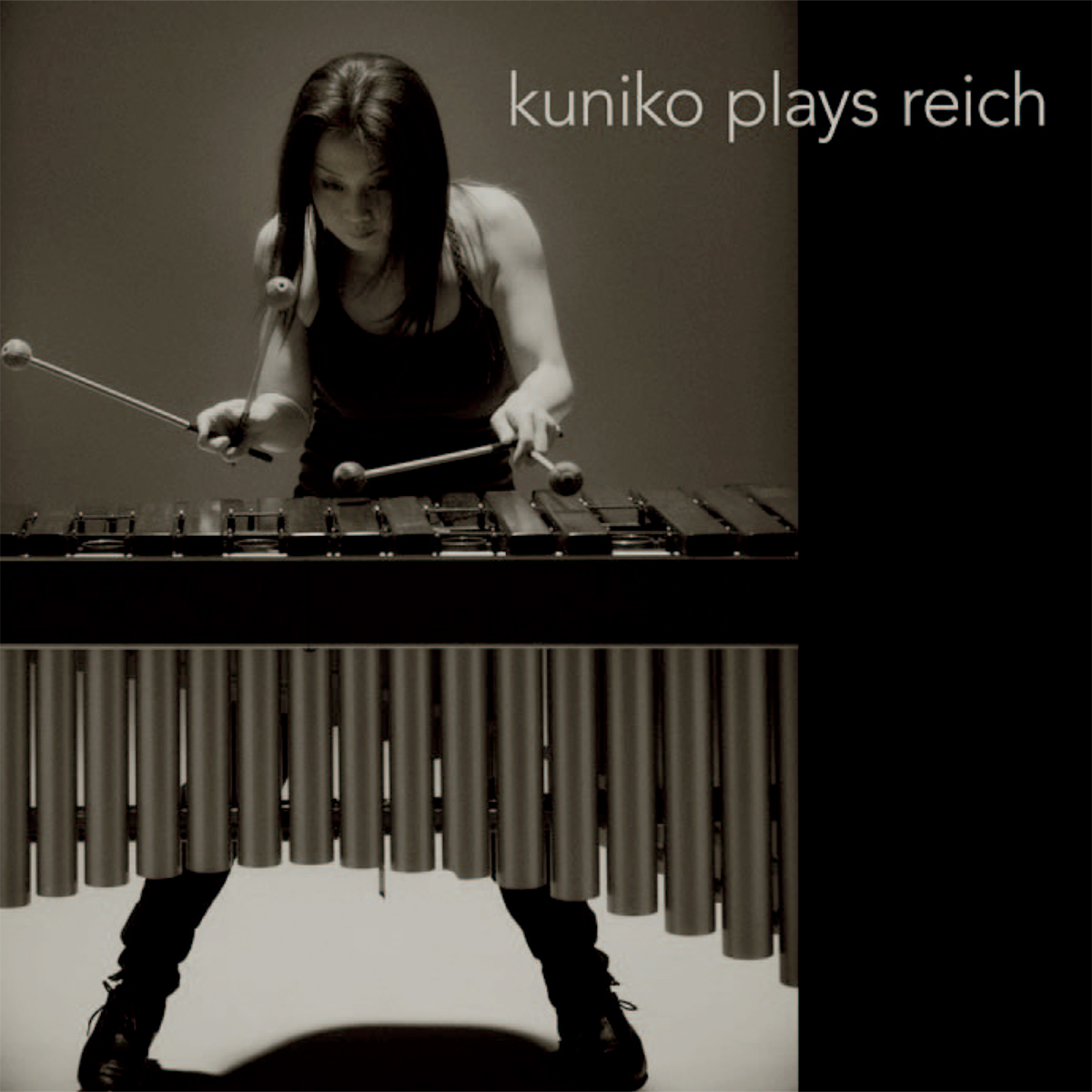
American Record Guide
01 September 2011
American Record Guide
Kuniko is an exciting and expressive percussionist who has performed a great variety of 20th Century music. She has made idiomatic arrangements of two pieces from Reich’s “Counterpoint” series (Electric Counterpoint was originally scored for guitars; Vermont Counterpoint, for flutes) and produces a delightful multitracked recording of Six Marimbas. I cannot fault the ingenuity and care of the arrangements and am awed by her technique and musicality. Unfortunately, the percussion instruments she uses (including steel drums and marimbas) obligate her to transpose much of Electric Counterpoint up an octave, and I miss the solid foundation for the harmony that the lower notes supply in the original. On the other hand, the Vermont arrangement (scored for vibes) improves on the flute original in many ways, not least in rhythmic incisiveness.
The Sunday Times
10 July 2011
The Sunday Times by Paul Driver
…That couldn’t quite be said of the young Japanese-American percussionist Kuniko, who played a 70-minute sequence at the recently built, crisply finished Parabola Arts Centre. The essence was her versions of three of the “couterpoint” pieces (for other instruments) by Steve Reich – whose 75th birthday the festival celebrated – but she began with a marimba suite of her own and fitted in Hywel Davies’s Purl Ground (2003) for marimba, an exercise in sotto-voce tremolos. The Reich works all involve mulitple versions of the same performer on tape, duly intermodulated, and often one wonders why a live element is needed at all. Kuniko left one in no doubt. Her lissome presence was all-dominating. She didn’t merely play her vibes, glockenspiel and marimba, she danced around them.
L'Union
11 July 2011
L’Union by Cécile DELOBEL
Dans le hall d’exposition au 1er étage du centre des congrès, lieu digne d’une chorégraphie de Pina Bausch, haute et large structure métallique, de béton et de verre laissant passer en ses côtés la lumière, le ciel, les marronniers du jardin et la ville, c’est aussi à une véritable démonstration d’art martial que nous a invités hier après-midi, Kuniko Kato tout d’abord lorsqu’elle a joué Rebonds de Xenakis.
En percussions, tout le corps participe, c’est visible : les pieds sont sur la pointe pour un son plus aérien ou prennent au contraire appui sur le sol lorsqu’il faut de la puissance, les jambes assurent l’équilibre d’un côté ou de l’autre, véritable balancier, les bras dirigent les baguettes et leur intensité, chaque frappe est pensée, préparée tout en beauté. L’expression du visage elle-même l’accompagne ou l’anticipe comme chez le samouraï. Rien n’arrête Kuniko Kato, qui a fait son apprentissage à Tokyo, auprès de Keiko Abe, la reine des marimbistes. Elle est capable des rythmes les plus complexes comme dans Rebonds a. Elle enchaîne de façon virtuose comme dans Rebonds b l’alternance bien contrastée entre le chant de guerre, roulement des cinq toms et les sons du marimba et du woodblock, véritable souffle du vent dans les roseaux. Les sons viennent de très loin jusqu’à nous puis s’éloignent dans les trilles du marimba, sur la pointe des pieds, elle danse doucement comme dans Torse III d’Akira Miyoshi. Elle nous montre que tout peut se dire : les longues phrases insistent, interrogent, des accords aux amples vibrations avec pédale répondent : c’est Omar I et II de Franco Donatoni au vibraphone.
Toute la deuxième partie consacrée à la musique de Steve Reich emploie un dispositif de dix haut-parleurs qu’elle dispose en cercle autour d’elle et qui diffusent les autres voix lui permettant de jouer seule un morceau composé à l’origine pour six marimbas. Un ingénieur du son, Yuji Sagae, en règle l’équilibre pour qu’il corresponde au son naturel du marimba et à ce qu’elle joue. Littéralement entouré par le son, l’auditeur n’a plus qu’à se laisser ensorceler ou hypnotiser. En témoigne une petite fille au premier rang plongée dans ses rêves. Kuniko Kato nous montrera encore combien tout en jouant, elle se chante la musique de Steve Reich à elle-même, s’amusant de toutes les syncopes, changements de rythmes et toujours très claire dans ses intentions.
Electric Counterpoint qu’elle a transcrit pour pouvoir le jouer aux percussions et seule nous fera entendre aussi les steel drums, ces espèces de « casseroles » d’acier qui rappellent le son des gamelans dans une version qui enchante Steve Reich, signe de leur parfaite entente musicale. Pour finir ce furent des applaudissements nombreux et enthousiastes, saluant autant la musique que la chorégraphie de Kuniko Kato qui remercia par une dernière transcription : un chant japonais au marimba.
The Big City Blog
04 June 2012
The Big City Blog by George Grella
It seems the Art Space struggles against this obstacle. Reich is titan of contemporary music and, in a country where composers don’t register on the public consciousness, he is generally popular with sophisticated fans of all sorts of music. Yet Kuniko’s concert was lightly attended, and much of the audience seemed connected to the music through the Consulate General of Japan. This was an excellent concert. The music, “Electric Counterpoint,” “Six Marimbas,” Vermont Counterpoint” and “New York Counterpoint,” with modest and lovely arrangements of Bach and Komitas, speaks for itself, and Kuniko’s craft is superior. Reich’s work lends itself easily to transcription to other instruments, and the pitfall is that it is so easy that the results can be lazy and dull. She has a subtle and imaginative ear for color, and moving the lead voice of the opening movement of “Electric” to steel drums was a gorgeous touch, adding a shimmering, sustained richness as well as a delayed attack that made for a new, ambient quality.
Percussion instruments call for a great apparent physicality in playing than guitars or violins or flutes, and that was visually important in the concert, not only the effort of Kuniko in striking metal and wood with beaters, but her dancing movements. She was filled up with the physicality of Reich’s beat, even as the sonic edge of the musical was gentler, as in the transfer of “New York” from piping clarinets to mellow marimbas. The music is very well known by now, but she made it refreshing. With her own ear and taste she responded to pieces that she clearly feels are beautiful and gave us music-making that took for granted the intellectual success of the composer’s process and craft and gave us the sheer beauty of it, and that’s a considerable thing.
Time Out Tokyo
13 June 2011
Time Out Tokyo
‘This small girl plays so powerfully,’ marveled Steve Reich the first time he saw Kuniko Kato perform one of his pieces. Fortunately, the Japanese percussionist – who goes simply by her first name – took it as a compliment rather than a putdown. Kuniko has since established herself as one of the world’s foremost interpreters of Reich’s percussion pieces, first with the Brussels-based Ictus Ensemble and more recently as a solo performer. Her new album, Kuniko Plays Reich, features her own arrangements of ‘Electric Counterpoint’, ‘Six Marimbas’ and ‘Vermont Counterpoint’, devised in collaboration with the composer himself, and with Kuniko overdubbing the various parts. Live, she repeats the trick by playing with a backing track – not an ideal solution, perhaps, but we suspect she’ll be able to pull it off.
MusicWeb International
12 June 2011
Music Web International by Kirk McElhearn
This disc contains percussion arrangements of three works by Steve Reich, performed by percussionist Kuniko Kato using multiple overdubs. The artist says, “All three pieces were solo overdubbed; however I played through all the parts from the beginning to the end, without using loops or quantisation in order to emphasise the live atmosphere in ensemble performance. All of the mixings are based on my concepts and I closely collaborated with each recording engineer.”
Electric Counterpoint was scored for “as many as ten guitars and two electric bass parts”, which were taped, and an additional guitar performing live. Here, Kuniko’s arrangement loses the fluid, pulsing sound of the guitar, but creates its own sound-world, very close to other Steve Reich works for percussion. The effect is interesting and attractive, and listening to this piece made me forget what the original sounds like. It takes on a world of its own as a more jumpy work, and has an attractive sound and energy.
Six Marimbas Counterpoint is an arrangement of Six Marimbas, which, itself, is an adaptation of one of Steve Reich’s seminal works, Six Pianos. Kuniko performs this with one part live and five parts on tape. Compared to Reich’s own recording of this work, the sound is fuller and richer here, but the music is similar, and the tempo is close enough to the original that it differs by only a few seconds. This is, in my opinion, one of Reich’s most interesting works, and perhaps one of the best ways to discover his music. The original Six Pianos has, I think, a more attractive sound than the version for marimbas, but it’s obvious that getting six pianos on a stage is difficult. This work is full of gorgeous rhythmic interplay among the different instruments, based around very strict rhythms.
Finally, Vermont Counterpoint Version for Vibraphone is an arrangement of a work scored for eight flutes and tape. Here, played on vibraphone, it gives a much different tone than the original, yet it works just as well. As it is a work based on rhythmic structures, percussion fits the music, and the sound Kuniko achieves is quite attractive. The mixing is interesting as well, with a broad soundstage spreading out the various instruments so they sound both separate and connected at the same time.
If you’re a fan of Steve Reich’s work, you’ll certainly find this an interesting disc. If not, it may not be the best place to start, as the somewhat uniform approach of three works for percussion may not be the ideal gateway to this type of minimalism. But Reich’s music is based on rhythm, and percussion is the most apt type of instrument to perform it.
Well conceived, and very well recorded, the only downside to this enjoyable disc is that it is a mere 41 minutes. One or two more works by Reich would have been nice.
Musica Magazine
26 May 2011
Musica Magazine by Claudio Bolzan
Esponente di spicco del minimalismo in musica, Steve Reich è presente in questo disco con tre ampie composizioni per organici diversi, arrangiate e presentate dalla percussionista giapponese Kuniko Kato in una nuova veste strumentale (realizzata consultando direttamente lo stesso compositore): Electric counterpoint, articolato in tre movimenti (da eseguire senza soluzione di continuità), è presentato in un’elaborazione per vibrafono, marimba e nastro preregistrato; Six marimbas counterpoint è offerto in una riduzione per la sola marimba e nastro preregistrato, mentre Vermont counterpoint è eseguito nella versione per solo vibrafono e nastro preregistrato. Si tratta di composizioni nelle quali un modulo ritmico-melodico è ripetuto dall’inizio alla fine apportando microvariazioni tese a creare un impercettibile movimento all’interno di un tessuto compatto e, solo apparentemente, uniforme. Nell’affrontare questo arduo itinerario, la percussionista giapponese Kuniko Kato si è dimostrata una strumentista straordinaria, pienamente in grado di dipanare questi vasti e complessi edifici con una lucidità e una organicità tali da dar vita a una trama sonora di singolare fascino, grazie anche alle magie timbriche create con la marimba: è il caso, ad esempio, del Six marimbas counterpoint, reso con una precisione ritmica e con una energia davvero sorprendenti, o, ancora, del Vermont counterpoint, pagina di liquida fluidità affrontata con un controllo assoluto non solo del ritmo, ma anche delle dinamiche. Al disco è allegato un elegante fascicolo comprendente ampie e dettagliate note di presentazione firmate dallo stesso Reich e da Kuniko Kato.
The Scotsman
24 May 2011
The Scotsman by Kenneth Walton
The music is familiar, but the artist isn’t. This is Japanese percussionist Kuniko’s debut album for Linn, in which she premieres her own percussion arrangements of three of American minimalist Steve Reich’s “counterpoints” of the 1980s – Electronic Counterpoint, Six Marimbas Counterpoint and Vermont Counterpoint. She focuses on a sound world dominated by marimba, vibraphone and steel pans, which colour these works with soft-cushioned textures. But it is her direct collaboration with Reich, and a worldwide network of top sound producers, that adds sheen to the multi-tracked finished article.
Phile-Web
06 August 2011
Phile-Web by Tadashi Yamanouchi
‘kuniko plays reich’ an excellent album that even challenges your audio device
Here are two extracts from Tadashi Yamanouchi’s lovely review for Phile-Web Japan:
‘It made me excited as if I am listening to a brand-new piece.’
‘Kuniko’s challenging approach is totally beyond the faithful reproduction of the score or just a different version with other instruments, and it is rather successful in creating new dimension of Reich’s works.’
The Observer
24 April 2011
The Observer by Stephen Pritchard
Steve Reich’s trademark mesmeric repetitions take on another quality here when they are lifted away from their intended scoring and given to percussion. Japanese virtuoso Kuniko finds new sonorities in Electric Counterpoint, written for guitars, when transferring it to steel pans, marimba and vibraphone, and brings Vermont Counterpoint (for flutes) to dazzling, invigorating life on the vibraphone. All these studio works involve vast amounts of pre-recording to refine their pleasing results, none more so than Six Marimbas Counterpoint which involves five pre-recorded tracks behind a solo line. It’s a hypnotic and strangely calming experience.
The Arts Desk
10 July 2011
The Arts Desk by David Nice
Sunday afternoon was a palate-cleansing Steve Reichfest. Bowen had jumped with three weeks’ notice at the chance to slip in a clutch of UK premieres from the phenomenal Kuniko Kato at the Parabola Arts Centre, centred around her composer-approved arrangements of Reich’s Electric Counterpoint – steel pans leading the way – Six Marimbas Counterpoint, a duet with Kuniko’s pre-recorded self through superlatively good speakers, and Vermont Counterpoint, in which she leapt stylishly between vibraphone and glockenspiel (her recording, which this performance instantly sold to me, is pictured below). I liked the subtle ripple of Kuniko’s own sea picture which launches her own marimba Suite, and the self-styled “aleatoric soul music” of Hywel Davies’s hauntingly near-inaudible Purl Ground.
Kuniko is the total artist, no question: her attention to lighting, sound, dancing communication with the audience and questing programme notes reveals a perfectionist. I can’t wait to hear her again.
Cheltenham Festival
01 April 2013
cheltenhamfestivals.com
Kuniko Kato released her 2011 album of Steve Reich arrangements to huge critical acclaim and the praise of the composer himself. Her latest project, due for release in May, takes one more of Reich’s counterpoints and a selection of some of the best known works from the meditative minimalist Arvo Pärt. Tracks from the aptly titled new CD, ‘Ultimate Minimalism’, will be performed live by Kuniko using a visually stunning array of electronic loops and speakers that allow her to duet with the melodies and patterns she has just played. Her performance is powerful, balletic and truly enthralling to watch. Beautiful, intricate, captivating arrangements of some of the most heartfelt music that minimalism has to offer.
CKUA Radio
10 June 2011
CKUA Radio by Kevin Wilson
Cloud-watching season is upon us: here’s the lying-on-your-back-in-the-grass-staring-at-the-sky music you’ll be needing. Kuniko Kato revisits three Steve Reich compostions from the 80s, creating her own arrangements for vibraphone, marimba and steel drum. The methodical Kuniko layers her own performances on top of one another, and the resulting sum of rhythm and melody beguiles. Compare Kuniko’s version of Electric Counterpoint, written for the guitar of Pat Metheny: the edges are rounded slightly here, and the evolving patterns of sound swing every so gently. In fact, this would be great to listen to while you’re on a swing. Sounds like summer to me: music brimming with vitality and carefree energy, the sound of nature in motion. Deservedly and unreservedly endorsed by the composer.
The Music Cube
26 May 2011
The Music Cube
Kuniko Plays Reich is a new album from Japanese percussionist Kuniko Kato featuring her own percussion arrangements of Steve Reich’s Electric Counterpoint (1987, written for guitars), Six Marimbas (1986), and Vermont Counterpoint (1982, written for flutes). Kuniko plays the steel pans, tenor pan, vibraphone, and marimba on the album. Each piece is arranged for solo percussion and pre-recorded tape for live performance.
According to Steve Reich: Kuniko Kato is a first rate percussionist who has put a lot of careful thought and hours of rehearsal into making this excellent CD. She has created new and very beautiful arrangements.
The Guardian‘s Stephen Pritchard calls the album “a hypnotic and strangely calming experience.”
Kuniko studied with Keiko Abe at Toho Gakuen School of Music in Tokyo, Japan and Robert Van Sice at Rotterdam Conservatorium in the Netherlands where she graduated summa cum laude as the first percussionist in the conservatory’s history. She has since performed around the world and collaborated with many renowned composers and conductors including James Wood, Franco Donatoni, Unsuk Chin and, of course, Steve Reich. She now lives in the US.
If you’re looking for something cool and modern, (but still accessible and easy on the ears) I definitely recommend Kuniko Plays Reich.
The Nottingham Post
16 May 2011
The Nottingham Post by Peter Palmer
US minimalist Steve Reich had his doubts when Japanese percussion virtuoso Kuniko Kato proposed arranging his guitar piece Electric Counterpoint for steel pans, vibes and marimba. He also had other ideas on Vermont Counterpoint, which she adapted for vibraphone and tape. But Kato won him over, and these poetic recordings show how. Her solo on Six Marimbas completes a superb album.
Words and Music
18 April 2011
Words and Music by Rick Jones
A CD, Kuniko Plays Reich, arrives from Record Company of the year, Linn Records. The Japanese percussionist arranges Electric Counterpoint for steel drums, marimba and vibraphone plus tape and worries the composer as he conceived the piece for electric guitars, ie identical instruments. Kuniko’s version, in which each movement focuses on a different instrument, persuades him however. The gentle steady rhythm is seductive. The pans clatter, their vague tuning is un-Reich-like, but their placid sway has the unexpected redolence of the Gamelan. Behind, the vibraphone’s ‘wave sound’ comes in and out of earshot like a swarm of bees, giving the music almost 3-D depth.
In Six Marimbas Counterpoint, Kuniko pre-records five of the parts and plays the sixth ‘live’, a contrast lost on disc. The smooth robotic pulse, unvarying volume, and constantly repeating phrases have a trance-like effect. She plays with clean, precise hits, the hard beater-heads giving an urgent bite to the music. The cheerful bounce contrasts with the conveyor-belt, automaton character like a happy factory worker.
Vermont Counterpoint is originally for flute and tape, but Kuniko’s version is for vibraphone. Phase shift techniques create chance rhythmic, gradually changing patterns as in a kaleidoscope. Nothing happens in the music; it never modulates, comes to no cadences and changes key only once and abruptly, without preamble. The piece stops as peremptorily as it starts, although the conclusion is marked with a shimmering of tones which is as much of an emotional climax as Reich ever creates. This is music for the machine age, clean, efficient, precise and of our time. Kuniko expresses this beautifully.
Just Listen
加藤訓子の最新ニュース、アルバムリリース、コンサート情報をご案内いたします。


